
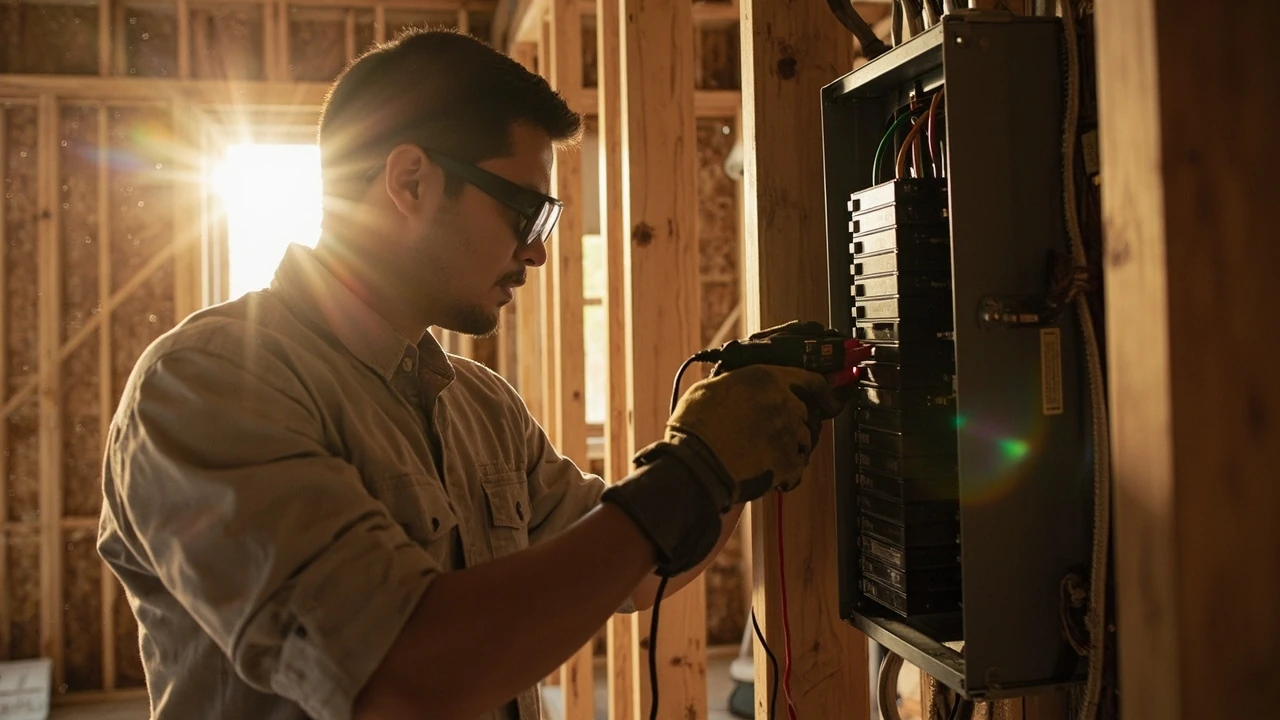
Tukang listrik: how to hire the right professional for home wiring work
A breaker that trips every time the microwave and the toaster run together is not a mystery; it is a sign that someone, somewhere, underestimated the load on that circuit. Most of the time, that “someone” is a previous owner who hired the cheapest worker available or who did the wiring himself on a weekend. The cost of fixing bad residential wiring is rarely the cable itself. It is the opened wall, the displaced tenant, the failed home insurance claim after a small electrical fire, or the sale that falls apart during the buyer’s inspection. Choosing a qualified tukang listrik is the single decision that separates those outcomes.
This guide walks through what a competent residential electrician actually does, which credentials and safety standards matter, how Indonesian and U.S. wiring practices overlap and differ, what fair pricing looks like in 2026, and the practical checks that protect a homeowner from a poor installation. It is written for homeowners, renovators, and property managers who need to make a confident hire without learning to be electricians themselves.
What a residential tukang listrik actually does
People often use the word “electrician” as if it described one job, but the residential work splits into three overlapping roles: new installation, troubleshooting, and code-driven repair. A good tukang listrik can move between them, but the skill mix and the tools differ enough that the conversation with a candidate should make clear which one you need.
New installation covers first-fit wiring in a house that is still under construction or in a room that is being gutted. The work is mostly planning and rough-in: laying conduit or armored cable, drilling studs, mounting back boxes for outlets and switches, pulling conductors, and leaving the circuit in a state the inspector can sign off on. Finishing, including connecting devices and energizing the panel, comes after plaster or drywall closes the wall.
Troubleshooting is the diagnostic work most homeowners actually call for. A circuit stops working, half the room loses power, a GFCI keeps tripping, or a light fixture flickers when the air conditioner starts. The electrician uses a multimeter, a clamp meter, and sometimes a megohmmeter to trace the fault, isolate the failing section, and either repair the conductor or replace the affected device.
Code-driven repair is the least visible but most important category. It includes panel upgrades, aluminum-to-copper pigtailing, bonding and grounding corrections, and rewiring of circuits that violate current safety standards even when they still technically work. The house may not have a problem today, but the wiring does not meet the rules a buyer’s inspector or an insurance underwriter expects, and the fix is paperwork-heavy as much as it is physical.
How qualifications work in Indonesia and why they still matter
Indonesia does not have a single national electrician license in the same way some Western countries do. Instead, the framework is built around certification, workplace safety, and the electrical installation standard known as PUIL, or Persyaratan Umum Instalasi Listrik. A tukang listrik who works to PUIL should be able to talk about wire sizing, protective device selection, grounding, and the relevant sections of the standard without flipping through a phone to look it up.
PUIL is administered and updated by the Indonesian national standards body, and current revisions define how circuits are protected, how grounding electrodes are sized, and how bathroom and outdoor wiring must be physically separated from water sources. A practitioner who has completed formal training through a vocational school, a certification program, or a utility-sponsored course is far more likely to be fluent in PUIL than someone who learned the trade informally from a relative.
For an international audience, it helps to map the roles. In the United States, a residential electrician is usually a licensed journeyman or master who has completed an apprenticeship of several years and passed state exams. The U.S. National Electrical Code (NEC) is the equivalent reference document, updated every three years, and most U.S. states adopt a specific edition with local amendments. A licensed U.S. electrician carries a license number that can be verified through the state contractor board.
Either way, the point is the same. A real qualification is a paper trail, not a confident smile. Ask for the document, ask when it was issued, and ask whether the person has refused work that required a permit.
Safety standards that a professional tukang listrik should follow on site
Electrical work is one of the few trades where a routine mistake can kill someone before the ambulance is called. The habits a professional brings to the job tell you more than any reference letter. Watch for the following during a site visit, because they are all signals of a worker who treats the standard as non-negotiable.
Personal protective equipment should be appropriate to the task. For live troubleshooting at low voltage, insulated gloves and safety glasses are baseline. For panel work, the worker should be wearing cotton or other non-melting clothing, closed-toe shoes with insulating soles, and should have a face shield available if the job requires it. The source excerpt from Kanggo’s article on hiring a professional tukang listrik describes exactly this: protective clothing without metal content, sturdy gloves, a helmet, and insulating footwear for high-risk installation work.
Lockout and verification is the second non-negotiable habit. Before touching a conductor, the worker should identify the breaker, switch it off, apply a lock or a tag, and verify the conductor is dead with a tested meter. A worker who reaches into a live panel “because it’s faster” is not a worker you want on the property.
Wire and breaker matching is the third. A breaker protects a conductor. If the breaker is 20 amps but the wire is only rated for 15, the wire overheats long before the breaker trips. A qualified tukang listrik will size the wire to the breaker, will derate for bundled conductors, and will explain the choice in plain language if asked.
Grounding and bonding is the fourth. Every metal enclosure, every water pipe bond, and every grounding electrode has to connect back to a single point of reference. Sloppy grounding is invisible until a fault makes it visible, at which point the equipment is already live.
When the right call is to pull a permit and when it is not
Permits exist so that a third party can verify that a piece of work meets the local safety code. Not every piece of residential work needs one, but the line is usually drawn at anything that changes the fixed wiring, alters the panel, or adds a new circuit. Replacing a light switch, swapping a cover plate, or installing a like-for-like fan in an existing fixture box usually does not. Adding a new outlet, running a new circuit, upgrading the panel, or changing the service entrance almost always does.
The practical question for a homeowner is not “do I need a permit” but “do I want the work to be insurable and saleable in three years.” Unpermitted work is a discount at resale and a denial at the claim desk. A tukang listrik who volunteers the permit process and explains the inspection schedule is signaling that the work is meant to last.
How to screen candidates before you let anyone touch the panel
The cheapest moment to filter out a bad electrician is the conversation before any tools come out. A short, structured screening saves money and protects the home. The following sequence works in practice and takes about twenty minutes per candidate.
- Ask for the certificate number and the issuing institution. Verify it directly with the school or the certification body rather than trusting a photocopy.
- Ask for two recent residential references whose work is at least twelve months old. Twelve months matters because most wiring faults show up after a full seasonal cycle of heating and cooling.
- Describe the job in plain terms and ask the candidate to repeat it back. A qualified worker will ask follow-up questions about panel size, existing load, and intended use of the new circuit.
- Ask for a written quote that separates labor, materials, and permit fees. Lump-sum quotes without a breakdown are a common source of disputes.
- Ask who actually does the work. Subcontracting is normal, but the person on the quote should be the person responsible for the result.
Anyone who refuses any of these steps is not the right hire. The friction of the screening process is part of the safety net, not a delay to push past.
Reading a quote: labor, materials, and what is missing
An electrical quote is a document, not a number. Three line items matter more than the total: a labor figure broken into hours or by task, a material list with brand and part number, and a permit line that says who is responsible for pulling it and paying for it. Without these, the total is meaningless.
Materials deserve a closer look. The cable, the breakers, the devices, and the conduit should all be named. A quote that says “wiring materials” without specifying brand and cross-section is an invitation for the cheapest available product to be installed. For Indonesian homes, products carrying the SNI mark are the baseline expectation for cable, breakers, and switches. The same Kanggo article referenced earlier points out that SNI-labeled products are the safer choice for residential installation.
Labor is harder to compare across markets, but a useful benchmark is to ask two or three contractors to quote the same written scope and compare. The middle quote is usually the most realistic. The lowest quote is almost always missing either the permit, the materials grade, or a contingency for the unknown work that opens up once a wall is opened.
Common residential problems a tukang listrik is called to fix
Some electrical problems show up in nearly every home. Knowing what they are and how a professional approaches them helps a homeowner judge the quality of the work on the other side of the visit.
| Symptom | Likely cause | What a qualified tukang listrik will do |
|---|---|---|
| Breaker trips when two large appliances share a circuit | Undersized circuit or overloaded shared neutral | Calculate load, propose a dedicated circuit, run new cable if panel capacity allows |
| Outlets in a bathroom or kitchen do not reset | Ground-fault circuit interrupter (GFCI) has tripped or failed | Test with a known-good device, replace GFCI if needed, check downstream loads |
| Lights flicker when a large load starts | Loose connection at the panel or a failing breaker | De-energize, torque terminations to spec, replace breaker if contacts are pitted |
| Burning smell from a switch or outlet | Overheated connection from loose termination or wrong wire gauge | De-energize immediately, replace device, inspect conductor for annealing, check upstream circuit |
| One half of an outlet works, the other does not | Backstab connection failure or broken tab on the receptacle | Replace receptacle, use side-screw termination rather than backstab, verify voltage |
Each of these is repairable in an hour or two by someone who has done it before. Each of them becomes a much larger problem if the diagnosis is wrong, which is the main reason that speed and price should rank below competence when hiring.
What a thorough on-site assessment looks like
Most homeowners are not present for the actual work, so the assessment visit is the only chance to evaluate process. A competent tukang listrik uses that visit to do four things, in order.
- Confirm the scope. Walk the site with the homeowner, look at the panel, count the existing circuits, and ask how the space is used day to day.
- Identify constraints. Look for asbestos, vermiculite, knob-and-tube, aluminum branch circuits, or shared neutrals that change the plan.
- Calculate the load. Add the existing nameplate loads plus the planned additions, and compare to the service capacity. The result drives whether a panel upgrade is needed.
- Write a plan. The plan should name the circuits, the wire gauges, the breaker sizes, the device locations, and the rough cost range before the actual quote is prepared.
A visit that lasts fifteen minutes and ends with a verbal number is not an assessment. It is a sales call. Push for the plan before agreeing to a contract.
Pricing benchmarks in 2026 and what drives them
Electrical pricing is local, but the structure is universal. Three variables drive almost every residential quote: the labor rate of a qualified electrician, the cost of materials at retail, and the scale of the job measured in points, fixtures, or circuit-feet. Travel, permit fees, and access difficulty (cluttered attic, finished basement, occupied home) add surcharges on top.
The table below gives rough order-of-magnitude ranges for common residential tasks. The figures are illustrative for a mid-sized urban market in 2026 and should be used only as a sanity check, not as a binding quote. Actual prices vary by region, scope, and material choice.
| Task | Typical scope | Indicative 2026 price range (USD) | Main cost driver |
|---|---|---|---|
| Replace a faulty outlet or switch | One device, like-for-like | 80 – 180 | Service call minimum |
| Add a new 15A outlet on an existing circuit | One device, short cable run | 150 – 350 | Wall access and finish |
| Run a dedicated 20A circuit for a large appliance | Cable run, new breaker, one outlet | 350 – 900 | Distance from panel |
| Upgrade a residential panel from 100A to 200A | New panel, new breakers, utility coordination | 2,000 – 5,000 | Utility fees and service entrance |
| Full rewiring of a small home (rough-in only) | Removal of old wiring, new cable throughout | 6,000 – 15,000 | Size and access |
| Troubleshooting call (first hour) | Diagnostic visit, identification of fault | 100 – 250 | Time on site |
Numbers outside these ranges are not automatically wrong, but they should come with an explanation. A quote far above the range usually means the scope is larger than the label suggests. A quote far below usually means materials or the permit are being trimmed.
How a tukang listrik plans a new circuit from scratch
Behind every outlet is a chain of decisions. Walking through the plan for a new 20-amp kitchen circuit shows the kind of thinking a qualified electrician brings to a job and helps a homeowner follow along.
- Load calculation. Add the nameplate wattage of the planned appliances, convert to amps, and compare to 80 percent of the breaker rating, since continuous loads are derated.
- Conductor selection. Choose a copper conductor with cross-section appropriate to the breaker and to the run length, accounting for voltage drop on long runs.
- Protective device. Match the breaker to the conductor, and choose AFCI or GFCI protection where the code requires it, such as for kitchen small-appliance circuits.
- Routing plan. Pick the path that avoids plumbing, gas, and other trades, while keeping the cable protected from physical damage.
- Termination. Land each conductor on the correct terminal, torque to the manufacturer’s specification, and label the new circuit at the panel.
A homeowner who can follow this list can also ask the right questions. “What size breaker did you put on this circuit?” is a useful question only if the answer matters, and it matters because the wire gauge has to match.
Red flags that should end the conversation
Some behaviors are early signs that a candidate is not the right hire. None of them are subtle, and none of them are forgivable in the residential trade.
- Cash-only invoicing, especially above the reportable threshold in the local jurisdiction.
- No written quote, or a quote that arrives by text message without a company name or address.
- Refusal to pull a permit for work that plainly needs one.
- Pressure to commit on the spot, often with a discount that expires “tonight.”
- Discomfort with the homeowner watching the work, or refusal to explain what is being done and why.
Any one of these is enough to keep looking. Two of them together is a near-certainty that the work will cause a problem later.
The role of the homeowner during the work
A good tukang listrik is not a stranger who disappears for a week. The homeowner’s job during the work is small but real: keep the area accessible, ask for clarification on anything that affects finish (device color, plate style, dimmer compatibility with LED bulbs), and arrange for a final walkthrough before the final payment.
The walkthrough is the last filter. The electrician should demonstrate that every new circuit is correctly identified at the panel, that every device works, that any GFCI or AFCI protection trips as designed, and that the work area is clean. Any deviations from the quote should be documented in writing, with a price adjustment agreed before final payment.
How Wikipedia frames the trade
For readers who want a broader, encyclopedic view of the profession, the English Wikipedia article on electricians is a useful starting point. It covers the history of the trade, the apprenticeship model used in several countries, and the relationship between licensing and safety outcomes. It does not replace a local code reference, but it is a quick way to anchor vocabulary before talking to a candidate.
A short checklist before signing the contract
Before the first day of work, the homeowner and the tukang listrik should agree on the items below. Putting them in the contract is the cheapest insurance against a dispute.
- Scope of work, written in plain language, with a drawing if the job is non-trivial.
- List of materials with brand, part number, and quantity.
- Permit responsibility and fee allocation.
- Start date, working hours, and estimated duration.
- Payment schedule tied to milestones, with a final retention of at least ten percent until the inspection passes.
- Warranty period for both labor and materials, with a named contact for warranty claims.
A contract that does not address these items is not really a contract. It is a promise, and promises are not what keeps a house safe.
Final reminders before the work starts
Two reminders are worth repeating. The first is that the cheapest quote is rarely the best one. Materials, permits, and qualified labor all cost money, and a quote that is dramatically lower than the others has usually cut one of those three. The second is that good electrical work is invisible. The customer never sees the cable that runs through the wall, the torque on a breaker terminal, or the grounding electrode buried outside. The job is to choose a tukang listrik who would do the work the same way whether the wall were open for inspection or closed up and forgotten.
If a homeowner is still unsure after two or three interviews, the answer is to keep interviewing. Electrical work is the rare trade where the cost of getting it wrong is paid in damage that the family notices only at the worst possible moment.
Frequently asked questions
How do I verify a tukang listrik’s qualification?
Ask for the certificate, the issuing institution, and the year of issue. In Indonesia, look for formal training from a vocational school, a certification body, or a utility program that covers PUIL. In the U.S., verify the state license number through the state contractor board website. A qualified worker will not be offended by the question.
What is PUIL and why does it matter?
PUIL is the Indonesian standard for electrical installations, covering wire sizing, protective device selection, grounding, and installation methods. Following PUIL is the baseline expectation for any tukang listrik working on a home. Ask whether the candidate is fluent in the current edition and how they stay current with revisions.
Do small jobs like replacing a switch or outlet need a permit?
Most jurisdictions do not require a permit for like-for-like device replacement. The work does need to follow the local code, and the device should match the circuit’s rating. If a permit question comes up, the electrician should know the local rule without asking the homeowner.
How long should a residential troubleshooting visit take?
A focused diagnostic visit is typically one to two hours, including testing and a verbal summary. If the fault is not identified in that window, the electrician should explain the next step rather than guessing. A clear “I need to investigate further” is a better sign than a confident guess.
What is the difference between a GFCI and an AFCI?
A ground-fault circuit interrupter (GFCI) protects people from electric shock by detecting current leaving the circuit unexpectedly, typically through a person. An arc-fault circuit interrupter (AFCI) protects the building from fire by detecting dangerous arcing in the wiring. Modern code often requires both, sometimes combined in a single breaker.
Can I do any of the electrical work myself?
It depends on the jurisdiction. Some small jobs, like swapping a cover plate or replacing a like-for-like device, are usually allowed for homeowners. Adding a new circuit, changing the panel, or working in the service entrance almost always requires a licensed professional and a permit. The local building department is the right place to confirm.
How do I know if my home has aluminum wiring?
Homes built or rewired in the late 1960s and 1970s sometimes used aluminum branch-circuit wiring. Look at the panel or open a switch or outlet (with the power off): aluminum conductors are silver rather than copper-colored, and they tend to feel lighter. A licensed electrician can confirm with a visual inspection and can recommend pigtailing with approved connectors if aluminum is present.
What should a written electrical quote include?
A useful quote separates labor, materials, and permit fees; names the materials by brand and part number; identifies the responsible party for the permit; gives a start and end date or estimated duration; and includes a payment schedule tied to milestones. A lump-sum number without these is not a real quote.
How often should a home’s electrical system be inspected?
A whole-home electrical inspection is sensible every ten years for an owner-occupied home, every five years for a rental, and immediately after a major event such as a flood, a fire, or a large renovation. Insurance underwriters sometimes require a more recent inspection, especially for older homes.
What is the most common cause of residential electrical fires?
Across most jurisdictions, the leading causes are loose or failed connections, overloaded circuits, and arc faults in older or damaged wiring. Routine inspection of the panel, tightening of accessible terminations, and the installation of AFCI protection where the code allows are the most effective preventions.
Leave a Reply