
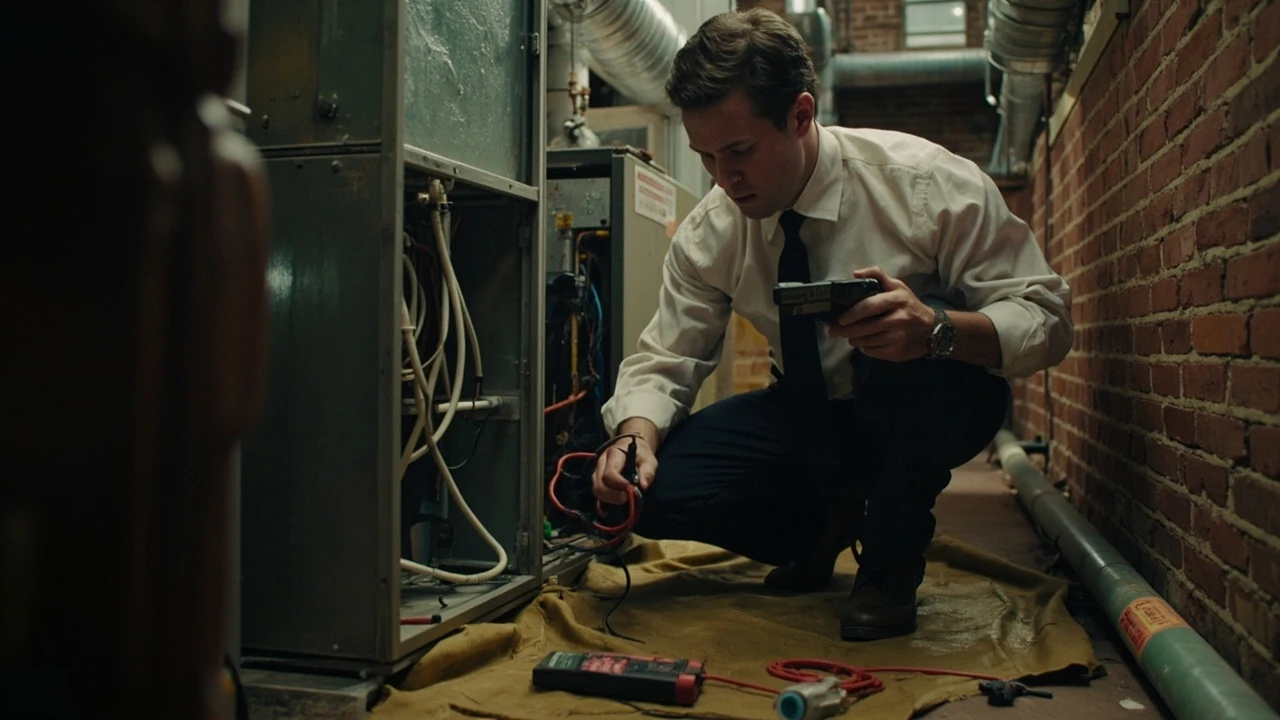
AC repair Philadelphia: a practical guide for homeowners before the heat sets in
Philadelphia summers are not subtle. By the second week of a 90-degree stretch, a weak air conditioner stops being an inconvenience and starts being a real problem, especially in older row homes and triple-deckers where the second floor always runs warmer than the first. If your system is blowing warm air, cycling on and off every few minutes, or refusing to start at all, you are about to enter the busiest week of the year for AC repair Philadelphia services, when wait times stretch and same-day appointments vanish.
This guide is built around the decisions a Philadelphia homeowner actually has to make: how to tell a minor issue from a serious one, what a qualified technician should be doing during the visit, what a fair diagnosis looks like, and when the better answer is replacement instead of another service call. It is written for the housing stock most people in the city actually live in: century-old brick homes with limited ductwork, converted multi-unit properties, and a long tail of mid-efficiency split systems that were installed between 2005 and 2018.
Why Philadelphia homes have specific cooling problems
The Philadelphia housing stock shapes the kinds of failures technicians see most often. A few patterns come up again and again in service logs across the city:
- Limited return air. Many older homes were never designed for central air. Returns are often undersized or missing in upper floors, which makes even a healthy system feel weak.
- Attic and basement equipment. The split between rooftop condensers on row homes and basement air handlers in twins means technicians need to be comfortable working in tight, low-ceiling utility rooms with shared service access.
- Refrigerant legacy. R-22 systems phased out by federal regulation still show up in homes built before 2010. A leak on one of these units is rarely worth a full recharge, and that decision has to be made quickly before refrigerant prices climb further.
- Concrete and brick radiant load. Heavy masonry walls hold heat long after sunset, which means thermostats keep calling for cooling well into the evening. This drives up run time, drives down efficiency, and exposes any weak component.
- Shared utilities. In duplexes and triplexes, electrical service and refrigerant lines are often run in cramped, shared chases, which makes troubleshooting slower and increases the value of a technician who has seen the building before.
None of these conditions make cooling impossible, but they do mean a homeowner who calls for ac repair philadelphia is not just buying a service visit. They are buying the judgment of someone who has worked on this kind of building before.
Warning signs that mean you should not wait for a convenient appointment
Most cooling systems give some warning before they fail completely. The problem is that early signs are easy to ignore, especially when the weather is mild and the unit is “mostly” working. A few symptoms are worth taking seriously right away because the gap between an early symptom and a real failure is short.
Warm air from the supply vents
If the indoor unit is running but the air coming out of the vents feels closer to room temperature than to cool, the most common causes are a refrigerant charge problem, a failed compressor, or a frozen evaporator coil. A frozen coil is often a secondary symptom of low refrigerant or restricted airflow, not the actual fault. A technician who replaces a contactor without checking suction pressure has not really diagnosed the unit.
Short cycling
A system that turns on for two or three minutes, then off, then on again, is rarely a thermostat issue. Short cycling usually points to an oversized system, a low refrigerant charge, a failing compressor, or a condensate safety switch that is tripping. It also costs more per minute of run time than a steady, longer cycle, so the system is using more energy for less cooling while it is being damaged.
Unusual sounds
Different sounds point to different problems. A high-pitched squeal is usually a blower motor bearing. A metallic scraping can be a failing compressor or a blower wheel hitting the housing. A clicking that only happens at start-up is often a failing capacitor, which is one of the cheapest parts on the unit and one of the most common reasons a system will not start at all. A loud hum with no fan movement on the outdoor unit suggests a bad capacitor or a seized motor.
Water where it should not be
The condensate drain pan and line are the unsung heroes of a Philadelphia basement. When the line clogs, the pan overflows, and the first sign is often water on the basement floor near the air handler. A wet ceiling below an attic unit is the same problem from above. Either way, the fix is usually a drain clearing, but the bigger question is why it clogged. Dust and algae build up faster in homes that have been closed up, and a pan treatment is a small thing that prevents repeat calls.
Rising electric bills without a weather change
If your July bill is meaningfully higher than last July, in the same weather, the system is losing efficiency. Common causes are a dirty condenser coil, low refrigerant, a weak capacitor, or a blower motor that is slowing down. None of these are dramatic, and all of them are cheaper to fix than the alternative, which is the compressor failing because the unit has been working too hard for too long.
What a competent AC repair visit in Philadelphia should actually look like
Not every service call is the same, but a thorough diagnostic has a recognizable shape. A homeowner who knows what the visit is supposed to include is much harder to overcharge or underserve. The list below is a reasonable expectation for any technician who is being paid to diagnose, not just to look at the unit.
| Step | What the technician should be doing | Why it matters |
|---|---|---|
| Talk through the symptom | Ask when the problem started, what changed, and whether the system is still cooling at all | Symptom history cuts the diagnostic time and prevents the wrong part from being replaced |
| Check thermostat and controls | Verify mode, setpoint, fan setting, and battery; check for loose thermostat wiring on older units | A surprising number of “no cooling” calls are actually thermostat or breaker issues |
| Inspect filter and return air | Pull the filter, check the return grille, look for collapsed ductwork or crushed flexible runs | Restricted airflow causes most evaporator freeze-ups and a long list of secondary failures |
| Measure temperatures and pressures | Compare supply and return air temperature, measure superheat or subcooling, check suction and discharge pressure | This is the real test of whether the refrigerant side of the system is healthy |
| Inspect electrical | Read capacitor microfarads, check contactor pitting, look at compressor amp draw | Electrical wear is the most common cause of a no-start condition |
| Inspect condensate | Confirm the drain is clear, the pan is dry, and the float switch is functional | Prevents the next service call from being a water damage call |
| Walk the homeowner through findings | Show the bad part, explain the cause, and quote the fix in writing before any work begins | Separates a diagnostic from a sales pitch |
A technician who does not measure pressures, who does not read the capacitor, or who jumps straight to recommending a full system replacement without showing data is not diagnosing. They are guessing with your money. Homeowners who have done ac repair Philadelphia work before learn quickly that the best technicians slow down at the start, not at the end.
The most common AC repairs in Philadelphia, ranked by frequency
Every shop in the region has the same handful of calls. The list below is roughly in order of how often each one shows up in a typical cooling season, and the table that follows gives a sense of what the repair usually costs relative to the value of the system.
- Capacitor replacement on the condenser or blower
- Condensate drain clearing and pan treatment
- Contactor replacement
- Blower motor replacement or lubrication
- Refrigerant top-off on a system with a known, repaired leak
- Evaporator or condenser coil cleaning
- Thermostat replacement or rewiring
- Compressor replacement on a younger system
- Full system replacement on a system that has reached the end of its useful life
| Repair | Typical part cost | Likelihood of repeat failure | Repair vs. replace call |
|---|---|---|---|
| Capacitor | Low | Low to moderate, depending on age of the unit | Almost always repair |
| Condensate service | Very low | Moderate if the underlying humidity problem is not addressed | Always repair |
| Contactor | Low | Low if the new part is correctly sized | Almost always repair |
| Blower motor | Moderate | Low on a younger system, higher on a system near end of life | Repair if the rest of the system is in good shape |
| Refrigerant top-off | Moderate to high | High if the leak is not located and repaired | Repair only if the leak is found and fixed |
| Coil cleaning | Low to moderate | Low, with annual service | Almost always repair |
| Compressor | High | High on older units | Often a replacement decision |
None of these are universal. The right answer depends on the age of the system, the condition of the air handler, and the cost of refrigerant on a particular unit. R-22 systems, in particular, push a lot of these decisions toward replacement, simply because the refrigerant itself has become expensive and hard to source.
Repair or replace: how to make the call without sales pressure
The repair-versus-replace question comes up on almost every serious ac repair philadelphia visit, and it is also the moment when a homeowner is most exposed to a bad recommendation. A few benchmarks help.
The age test
A well-maintained split system typically lasts 12 to 18 years. Past the 15-year mark, even a healthy unit is on borrowed time, and a major component failure is a reasonable prompt to consider replacement, because the next failure is usually not far behind. A compressor replacement on a 17-year-old system, for example, is often more than half the cost of a new high-efficiency system with a fresh warranty.
The refrigerant test
If the system still uses R-22, every refrigerant decision is now a financial one. A leak on an R-22 system is not just a refrigerant cost. It is a signal that the next leak, and there will usually be a next one, is also coming. Replacement with a modern R-410A or R-454B system usually pays for itself in avoided refrigerant and avoided service calls within a few years.
The history test
One repair in five years is normal. Two repairs in two years on a system under ten years old is a yellow flag. Three repairs in two years on a system of any age is almost always a signal to replace. The math on a third service call rarely makes sense when the technician is rolling a truck for the third time in 24 months.
The efficiency test
Older single-stage systems run at one speed, all the time, regardless of the load. A modern variable-speed system can cut cooling energy use meaningfully, especially in homes with zoning, oversized ductwork, or rooms that are hard to condition. The savings are real but slow, and the payback calculation depends heavily on electricity rates and how much the system runs.
The comfort test
Sometimes the real reason a homeowner is shopping is comfort, not efficiency. Rooms that never cool, humidity that lingers, hot and cold spots between floors. A new system with better airflow design, a dehumidification mode, and proper return air can solve problems that a repair visit cannot. A good technician will tell you when a repair is technically possible but is not going to make the home comfortable.
How to choose an AC repair contractor in Philadelphia
Philadelphia has a wide range of HVAC companies, from one-truck owner-operators to large regional firms. There is no single right size. The right size is the one that gives you a clean diagnostic, an honest answer, and a written quote. A few things are worth checking before the truck rolls.
- License and insurance. Pennsylvania requires HVAC contractors to be registered, and reputable firms carry both liability and workers’ compensation coverage. Ask for proof, not just a claim.
- Written diagnostic fee and quote. The diagnostic should be a defined price that is credited against the repair if you proceed. The repair quote should be in writing, with parts and labor separated.
- References in your building type. A row home with a basement air handler is not the same job as a single-family colonial with an attic unit. Ask whether the company has worked on a similar home recently.
- Local presence. A company that has been in Philadelphia for a long time is more likely to be around if a warranty part fails in the first year. Out-of-area storm chasers show up after heat waves and disappear by fall.
- Pressure handling. A contractor who pushes a replacement before measuring pressures, or who refuses to show the failed part, is selling, not diagnosing.
For a deeper look at how to evaluate contractors across home projects, the practical framework in Home Remodeling Contractors: How to Hire the Right Team in 2026 applies to HVAC work as well. The questions to ask, the paperwork to request, and the warning signs of a poor fit are very similar.
What a fair AC repair quote should include
A written quote protects both sides. It gives the homeowner something to compare and gives the contractor a clear scope. The line items below are a reasonable expectation, and the absence of any of them is worth asking about before the work begins.
| Line item | What it tells you |
|---|---|
| Diagnostic fee | A defined price, often credited toward the repair if you proceed within a window |
| Part cost | The actual cost of the part, not a generic “material” line |
| Labor hours or flat labor rate | Either a flat rate per task or a clear hourly estimate with a cap |
| Refrigerant type and quantity | Important on R-22 systems, where the cost of the refrigerant can exceed the labor |
| Warranty terms | Separate terms for parts and labor, in writing |
| Permit and code notes | Required for some electrical and refrigerant work, particularly on new circuits |
| Cleanup and disposal | Especially relevant for full system replacements |
If the quote is a single number with no breakdown, ask for one. A good contractor will not be offended. A bad one will often decline, which is itself an answer.
Preventive maintenance that actually prevents repairs
Most cooling failures are not random. They are the predictable result of small problems accumulating over several seasons. A small amount of attention in the spring and a small amount of attention in the fall will prevent a meaningful share of the emergency calls that drive the ac repair Philadelphia market in July.
- Replace or wash the filter monthly during heavy use. A clogged filter is the single most common cause of a frozen coil.
- Keep the outdoor unit clear. Two feet of clearance on all sides, no ivy growing into the coil, no leaves packed against the fins.
- Pour a cup of distilled white vinegar or a pan tablet down the condensate line every couple of months during the cooling season. Algae is the usual cause of a clogged drain.
- Schedule a spring tune-up. A technician cleaning the coils, checking the capacitor, and measuring pressures in April will catch the small issues that become July emergencies.
- Listen to the unit. New sounds are early warnings. A bearing that starts growling in May is a planned replacement, not a July emergency.
- Watch the electric bill. A meaningful jump in run time or kilowatt hours without a weather change is a sign that something is starting to slip.
None of this replaces a service visit. It just means that when a technician does come, the visit is a small one instead of a big one.
When the system is part of a larger home project
Cooling problems sometimes show up during a remodel, a roof replacement, or a basement finish-out. A new ceiling, new ductwork, or a new electrical panel can change the load on the cooling system in ways that expose an aging unit. A few project interactions are common in Philadelphia homes and worth planning for.
- Roof replacement. A new roof usually means a new condenser pad, and sometimes a new line set. Coordinating the HVAC scope with the roofer prevents the unit from being out of service for two separate appointments.
- Electrical service upgrade. Many older Philadelphia homes are still on 100-amp service. A new air handler, a new condenser, or both, may push the home past that limit, which is a real conversation to have before a quiet electrical panel becomes a bottleneck.
- Basement finishing. A finished basement is harder to cool, and the ductwork often needs to be rebalanced. A cooling tune-up is a good moment to ask for a static pressure test and a quick room-by-room check.
- Attic insulation. New insulation changes the load on the upstairs unit in ways that take a season to settle. A new thermostat setpoint and a fresh filter change are usually enough to recalibrate.
For homeowners thinking through a broader project, the same planning discipline that applies to a kitchen or a bathroom applies to cooling. A few phone calls before the work starts save a lot of coordination after.
Frequently asked questions
How fast can I get same-day AC repair in Philadelphia during a heat wave?
During a heat wave, most reputable companies triage by vulnerability. Households with infants, elderly residents, or medical conditions that require cooling come first. Beyond that, response time depends on technician availability and how early in the day you call. Calling before 9 a.m. on a weekday gives you the best chance of a same-day visit. After a heat wave peaks, expect a two to three day backlog as the system works through accumulated calls.
What does a typical AC repair cost in Philadelphia?
Costs vary by system and problem, but a few rough ranges are useful. A capacitor or contactor replacement often lands in the low to mid hundreds once labor and parts are included. A blower motor replacement is usually higher, in the mid to high hundreds. A refrigerant leak search, repair, and recharge on a modern system runs higher still, and on an R-22 system can run significantly higher because of the refrigerant cost. Full system replacements are in a different category entirely and depend heavily on size, efficiency, and ductwork changes.
Is it worth repairing an older R-22 air conditioner?
Sometimes, but the math has shifted. R-22 refrigerant is expensive, sometimes scarce, and the supply is being phased down. A small, well-understood repair on an otherwise healthy R-22 system is still reasonable. A large repair, especially a compressor or a coil, is usually a signal that the system is at the end of its useful life, and replacement with a modern system is the better long-term answer.
How do I know if my AC is low on refrigerant?
You cannot tell from the vents alone. Ice on the suction line at the air handler, warm air from the supply vents, and a system that runs a long time without reaching setpoint are common signs, but the only reliable test is a pressure and superheat measurement done by a technician. If a contractor offers to “top off” refrigerant without first locating a leak, that is a red flag.
Do I need a permit for AC repair work in Philadelphia?
Simple component replacements like capacitors, contactors, and thermostats generally do not require a permit. New circuits, full system replacements, and significant ductwork changes often do. A licensed contractor will know when a permit is required and will pull it as part of the job. If a contractor is unsure, that is itself a sign to slow down and verify.
What is the difference between a tune-up and a repair?
A tune-up is preventive. The technician cleans coils, checks pressures, tests electrical components, lubricates moving parts where appropriate, and confirms the system is running within manufacturer specifications. A repair is corrective. The technician is responding to a specific failure and replacing the part that caused it. A good ac repair philadelphia visit can include both, but the visit is billed differently depending on which it is.
Can I run the fan without the cooling to keep air moving?
Yes, and it can help with circulation and filtration, especially on mild days. It is not a substitute for cooling when the home is genuinely hot, and it is worth knowing that the fan still uses electricity. Some systems let you set the fan to “auto” so it only runs with the compressor, which is the most efficient option for everyday use.
How long should an AC repair take once the technician is on site?
Most single-component repairs are completed in one to three hours once the part is on the truck. Diagnostic-only visits are usually shorter. Repairs that require a special-order part, a second technician, or a return visit for refrigerant work take longer, and a good contractor will set that expectation up front rather than running out the clock.
What should I do before the technician arrives?
Clear access to both the indoor air handler and the outdoor condenser. If the indoor unit is in a basement closet, move anything stored in front of it. If the outdoor unit is fenced in, unlock the gate. Make a short list of the symptoms, including when they started and what has changed. The five minutes of preparation often saves twenty minutes of diagnostic time on site.
Is annual maintenance really worth it on a newer system?
For most homeowners, yes. Manufacturer warranties often require proof of annual service to remain valid, and a tune-up is the cheapest way to catch a small problem before it becomes a large one. A well-maintained newer system also runs more efficiently, which over a decade adds up to a meaningful share of the maintenance cost in avoided electricity.
For a broader look at the kind of preparation that pays off across a Philadelphia home, including how cooling fits with other systems like plumbing and electrical, the practical homeowner guide on Sewer Line Cleaning: What Homeowners Should Know is a useful parallel. The same approach that prevents a sewer backup at midnight is the one that prevents an ac repair philadelphia emergency in August. Slow, steady attention to the systems that keep a home running, instead of waiting for the moment they fail, is the strategy that pays off the most over time. For a sense of how local Philadelphia HVAC providers approach a maintenance and repair visit, the page on expert A/C maintenance and repair in Philadelphia walks through the diagnostic and service process in more detail. A final practical note: refrigerant recovery and disposal, electrical work on a new circuit, and any change to the condensate routing are the moments in an AC repair where shortcuts cause the most damage. A contractor who follows the code on those three things is almost always a contractor who follows the code on the rest of the job as well.
Leave a Reply