
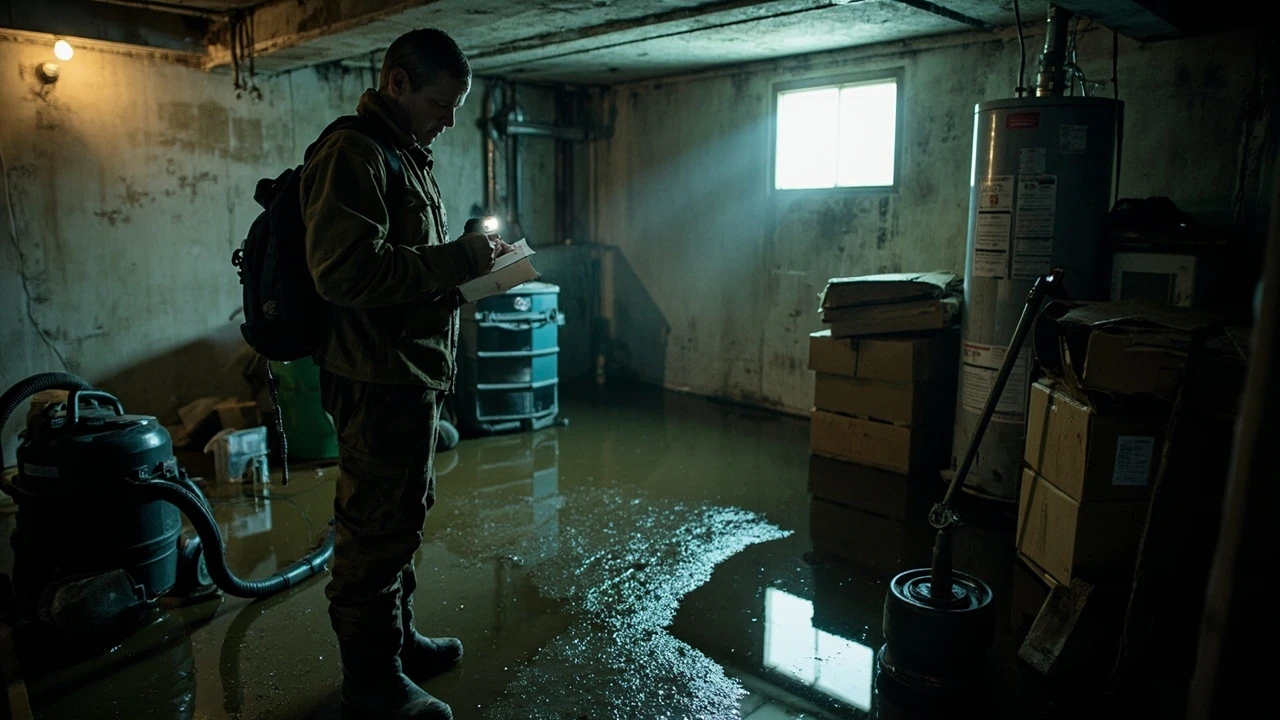
Flooded basement cleanup
You come down the stairs and the carpet squishes under your boot. The furnace is sitting in two inches of brown water, the outlets on the back wall are dark, and a slow drip is still coming from somewhere near the utility sink. That moment is the start of any real flooded basement cleanup, and the decisions made in the first hour usually decide whether the space recovers in a week or stays damaged for months.
Flooded basement cleanup is less about heroics and more about a sequence: make the space safe, remove standing water quickly, dry the structure thoroughly, then sanitize and decide what to keep. The same basic order applies whether the water came from a burst pipe, a failed sump pump, or stormwater that pushed through a foundation crack. The differences are in the details, especially around contamination and what is safe to handle yourself.
Make the basement safe before you do anything else
Water in a basement changes the electrical and structural picture instantly. Before grabbing a mop, walk through a short safety check. Skipping this step is the most common way a manageable cleanup turns into an injury or a much more expensive repair.
- Kill the power to the basement at the breaker panel. If the panel is wet or you cannot reach it without stepping into water, call an electrician or your utility rather than touching it.
- Assume any standing water is energized, especially if outlets, appliances, or the furnace are submerged. Even a few inches of water can conduct current from a damaged wire.
- Check for sagging ceiling tiles, bulging drywall, or a water line on the wall that keeps climbing. These are signs the water is still coming in and the structure may be holding more than it should.
- Wear waterproof boots, nitrile or rubber gloves, an N95 mask, and eye protection. Basement water often contains silt, sewage residue, mold spores, and sharp debris.
- Ventilate by opening a window or two on dry days, but only after the space is safe to enter. Avoid running the furnace blower if the ductwork is wet.
If the flooding involves a toilet backup, a sewer line, or any water that touched the outside ground, treat it as contaminated. The U.S. Environmental Protection Agency and CDC both classify this kind of water as a health hazard because of the bacteria and pathogens it can carry. In that case, personal protective equipment is not optional, and you will need stronger disinfection later in the process.
Identify the source so the cleanup does not restart
Cleaning up water while it is still entering the basement is like bailing a boat without plugging the hole. The first job after safety is to identify where the water is coming from and stop the flow if you can.
Clean water from a plumbing failure
Clean water losses are the easiest to handle. The most common causes are a burst supply line, a failed washing machine hose, a water heater leak, or a frozen pipe that finally let go. Shut off the fixture valve or, if needed, the main water valve to the house. Once the source is off, the cleanup is mainly a drying problem.
Stormwater pushed in from outside
Stormwater enters through foundation cracks, window wells, stairwell drains, or gaps where the wall meets the floor. You usually cannot stop the flow during a storm, so the practical move is to keep the water away from electrical equipment and contents, then start removal as soon as the rain eases. Long term, the fix is grading, gutters, downspout extensions, and sometimes a sump pump or French drain, but those are separate from the immediate cleanup.
Sewage or sump pump failure
A failed sump pump or a backed-up sewer line is the most expensive category because the water is contaminated. Do not mix this category with clean-water drying times, because porous materials that touched the water usually have to be removed and discarded rather than dried in place.
For quick reference during the first hours of a job, the table below compares how each water category changes your approach.
| Water category | Typical source | Contamination risk | What you can usually keep | What usually has to go |
|---|---|---|---|---|
| Clean (Category 1) | Burst supply line, water heater, washing machine hose | Low if handled within 24 hours | Hardwood floors, drywall above the water line, metal and plastic items | Saturated carpet pad, wet insulation behind walls |
| Gray (Category 2) | Overflowing sink, dishwasher leak, sump pump without sewage | Moderate | Concrete, sealed wood, hard non-porous items after disinfection | Mattresses, upholstered furniture, carpet, paper goods |
| Black (Category 3) | Sewer backup, river or stream flooding, groundwater intrusion with sewage | High | Concrete, metal, hard sealed surfaces that can be disinfected | Most drywall, carpet, pad, insulation, cardboard, fabric, paper documents |
Remove standing water the right way
Once the space is safe and the source is under control, the next step in any flooded basement cleanup is pulling the water out. The method you use depends on how much water is down there and what equipment you can get on site.
For a small puddle under a few inches
A wet-dry shop vacuum is the standard tool. It is faster than a mop and bucket, and it lifts water rather than pushing it around. Empty the tank frequently, and do not run the vacuum if the water level reaches the motor housing. If the water line is near electrical outlets, stop and pump instead.
For several inches across the floor
A submersible utility pump moves water much faster. You can rent one from most home improvement stores for a day, and a standard garden hose carries the discharge out a window or through a floor drain. Place the pump on the lowest part of the floor and keep the intake screen clear of debris.
For a full basement with a foot or more of water
At that depth, you usually want a trash pump with a larger discharge hose, and you may need a generator if power is out. A typical residential basement holds 1,500 to 2,500 gallons of water per foot of depth, so even a partial fill is a serious volume. Plan on staged pumping: drop the level, let the floor drain, then pump again. Draining too fast can crack basement walls if the surrounding soil is still saturated, because the pressure outside the wall no longer balances the empty space inside.
Industrial restoration crews use the same basic approach, just with truck-mounted extractors and more powerful pumps. For a homeowner, the priority is to get the water level below the bottom of the drywall and away from the furnace, water heater, and electrical panel. After that, the drying phase does most of the real work.
Dry the structure before you close anything back up
Drying is the step that prevents the long-term damage from a basement flood. Visible water is gone long before the structure is actually dry, and a closed-up wall with moisture trapped inside it is a perfect place for mold to start growing within a couple of days. A careful flooded basement cleanup treats drying as a project, not a wait.
Pull wet materials out so air can move
Drywall wicks water several inches above the visible line, so the standard practice is to remove the bottom 12 to 24 inches of drywall and any wet insulation behind it. Baseboards, vinyl or rubber cove base, and any tight-trimmed carpet usually come out next. For wood paneling, the decision depends on how the panels are mounted and how wet the wall cavity is.
For flooring, the choices are not always obvious, which is why many homeowners work through a quick decision table.
| Flooring type | Can it be dried in place? | Conditions that matter | Typical recommendation |
|---|---|---|---|
| Concrete with paint or sealer | Yes, usually | Surface dries in days; slab itself stays wet longer | Dry with airflow and dehumidification, monitor with a moisture meter |
| Ceramic or porcelain tile | Yes, if substrate is intact | Grout and cement board can hold water | Dry the room, check for loose tiles after a week |
| Engineered wood or laminate | Rarely | Edges swell, planks cup | Remove and discard, even if it looks dry on the surface |
| Solid hardwood over plywood | Sometimes | Cupping can be reversed if dried quickly with a professional drying system | Pull the floor if water sat for more than a day or the subfloor is wet |
| Carpet over padding | No, for category 2 or 3 water | Pad acts like a sponge | Remove carpet and pad, dry the subfloor, replace pad and reinstall |
Move air and pull moisture out
Two tools do the heavy lifting in the drying phase: air movers and dehumidifiers. Air movers push warm, dry air across wet surfaces so evaporation speeds up. Dehumidifiers capture that moisture before it migrates into the rest of the house. A common residential setup is one large refrigerant or LGR dehumidifier paired with three to six air movers, depending on square footage.
Run the equipment with windows closed so the system is not fighting outdoor humidity. If the power is out, a generator with enough capacity to run a dehumidifier and a couple of fans is well worth renting for the first day or two. Temperature matters too: warmer air holds more moisture, so if you have a safe way to warm the basement to around 70 to 80 degrees, drying is faster.
Track moisture instead of guessing
A simple pin or pinless moisture meter pays for itself on a single job. The goal is to confirm that wood framing, subfloor, and drywall at the cut line are back to normal moisture content before you close the walls back up. Most residential wood is dry at 12 to 15 percent moisture content, and a clean concrete slab reads in a similar range once it is equilibrated. Tracking readings in a small log makes it easier to hand the project off to a contractor and easier to argue with an insurance adjuster if the job becomes a claim.
Clean and disinfect what you plan to keep
Once the structure is dry, anything that stayed in the basement needs to be cleaned. Even clean water picks up silt, dust, and whatever was already on the floor, and gray or black water adds biological contamination that does not go away on its own. Skipping disinfection is one of the most common reasons a finished basement starts to smell musty a few weeks after a flood.
- Hard, non-porous surfaces: scrub with a detergent solution, rinse, then apply a disinfectant. A solution of about 1.5 cups of household bleach per gallon of water works on most sealed surfaces, but test a small area first because bleach can damage finishes and metals.
- Concrete floors: vacuum or sweep fine sediment first, mop with detergent, then apply disinfectant. Allow at least 10 minutes of contact time before rinsing.
- HVAC ducts and the furnace: if floodwater reached the air handler or ductwork, the ducts should be inspected and either professionally cleaned or replaced. Running the blower through wet ductwork spreads mold spores through the rest of the house.
- Appliances: motors, controls, and any electrical parts of a furnace, water heater, washer, or dryer that were submerged need to be inspected by a technician before they are energized again. Even a quick dunk can corrode control boards.
- Clothing and textiles you want to keep: wash in hot water with detergent, and add a cup of chlorine bleach if the fabric allows. Dry on the highest heat the fabric can take.
For porous items that stayed in the basement during a black water event, the honest answer is that they usually cannot be cleaned well enough. Drywall, carpet, pad, insulation, paper, books, and most upholstered furniture are safer out of the house than back into it. This is one of the more expensive parts of a flooded basement cleanup, and it is also the part that protects the rest of the home from long-term air quality problems.
Decide what you can handle and when to call a pro
Homeowners regularly handle small basement floods with a wet-dry vacuum, a couple of fans, and a weekend of work. The cases that benefit from a professional restoration crew are not always the most dramatic. They are the ones where a small mistake quietly makes the problem worse.
Consider calling a restoration company when any of the following apply:
- The water covered more than a few hundred square feet, even if it was clean.
- The water sat for more than 24 to 48 hours before you started drying.
- The basement is finished, with drywall, built-in cabinetry, or insulation in the walls.
- The flood involved a sewer backup, a river or stream, or a sump pump that failed during heavy rain.
- You smell a musty odor, see visible mold, or have family members with asthma or compromised immune systems.
- The furnace, water heater, or electrical panel was submerged.
Professional crews bring truck-mounted extractors, a larger number of air movers and dehumidifiers, and the monitoring equipment to prove the space is actually dry. Many also work directly with insurance carriers, which can simplify the paperwork if you are filing a claim. For an example of how a national restoration provider describes the scope of a typical job, the SERVPRO overview of flooded basement cleanup and restoration walks through the same general sequence of safety, extraction, drying, and sanitizing that a homeowner follows on a smaller scale.
For general background on how basements flood and what contributes to chronic moisture problems, the Wikipedia article on basements covers the structural and drainage factors that drive most recurring issues. That is useful context if you are trying to figure out whether your basement will flood again next time it rains.
Plan a remodel around what you learned
A serious flood is a hard way to find out how a basement was put together. If you are already pulling drywall and trim out to the flood line, the cleanup and a small remodel often overlap. A few decisions are worth making before the walls are closed back up.
- Replace standard drywall with mold-resistant gypsum board in the lower portions of the walls. It costs a little more but handles the occasional damp basement much better.
- Add a vapor barrier behind the drywall where local code allows, especially in older homes that never had one.
- Reroute any low-mounted electrical outlets and switches so they sit a few inches above the new baseboard line. It is much cheaper to do this while the wall is open than after it is finished.
- Switch from carpet to a hard surface flooring, with a quality pad or underlayment underneath. Hard surface floors survive a future small flood and dry out faster.
- Install a battery backup on the sump pump, and add a water alarm that sounds before damage gets serious.
For a broader look at how a basement fits into a larger home remodel, the Blue Hammer Build guide on hiring the right home remodeling contractors covers the questions to ask and the trade-offs to weigh before you commit to a project. If the flood pointed to a chronic drainage or sewer issue, it is also worth reading the practical overview of sewer line cleaning so you understand what your plumber is actually recommending.
Prevent the next flood
Most basements flood for the same handful of reasons, and most of those reasons are addressable for a few hundred to a few thousand dollars. After the immediate cleanup, the work that pays off the most is preventing the next one.
- Clean gutters twice a year and extend downspouts at least 4 to 6 feet from the foundation.
- Regrade soil so it slopes away from the house at a minimum 6 inches over the first 10 feet.
- Test the sump pump once a year by pouring a bucket of water into the pit, and replace the battery every 3 to 5 years.
- Install a water leak detector near the water heater, washing machine, and any basement plumbing. A simple $20 alarm catches a slow leak that would otherwise go unnoticed for weeks.
- Know where the main water shutoff is, and make sure everyone in the household can reach it.
Frequently asked questions
How long does a typical flooded basement cleanup take?
For a clean water loss in an unfinished basement, active water removal usually takes a day and structural drying takes another three to five days with proper air movers and dehumidifiers. A finished basement with drywall, carpet, and a furnace in the water often runs one to two weeks of drying before reconstruction can begin, and another week or two of repair work after that.
Is it safe to stay in the house while the basement is drying?
In most cases, yes, as long as the affected area is contained and drying equipment is running normally. Keep the basement door closed, avoid running the furnace blower if the ducts were wet, and use an air scrubber if a restoration company recommends it. Family members with severe asthma, allergies, or immune conditions should talk to a doctor before spending time near the affected area.
Can I keep carpet that got wet?
If the water was clean and the carpet was dry again within 24 hours, the carpet itself can sometimes be saved, but the pad almost always has to be replaced. If the water was gray or black, both the carpet and the pad should be discarded. Carpet acts like a sponge for contamination, and you cannot fully sanitize the backing and the pad in place.
Do I need to replace drywall after a flood?
Any drywall that absorbed water above the baseboard usually has to come out. A common approach is to remove the bottom 12 to 24 inches and replace it with new board, which gives you access to the wall cavity for drying. In a black water event, drywall is removed to at least 12 inches above the high water line and often higher, depending on what the restorer finds.
How do I know if the basement is actually dry?
Use a moisture meter on wood framing, subfloor, and any remaining drywall at the cut line. Compare the readings to a similar piece of lumber in a dry part of the house. Most professionals also track relative humidity in the basement and aim for it to match the rest of the house within a few points before closing the walls back up.
What is the risk of mold after a flooded basement?
Mold can start to grow on wet organic material within 24 to 48 hours. The risk is highest in carpet, drywall, insulation, and paper goods that were not dried quickly. This is one of the main reasons the drying phase of a flooded basement cleanup is taken seriously: drying fast and thoroughly is the most reliable way to prevent a mold problem a few weeks later.
Should I file an insurance claim for a flooded basement?
Standard homeowners policies usually cover sudden and accidental water damage, like a burst pipe or a failed water heater, but they often exclude flood damage from outside water and many sewer backups. Check your specific policy and deductible before assuming a claim will help. Photograph the damage before cleanup starts, keep a simple log of hours and materials, and save receipts for any equipment you rent.
When is a flooded basement a job for a plumber or a restoration company?
Call a plumber first if the source is a burst pipe, a failed water heater, or a sewer backup, so the source is fixed before drying begins. Call a restoration company if the water covered a large area, sat for more than a day, reached porous materials, or involved contaminated water. In many cases the two trades coordinate, with the plumber stopping the leak and the restoration company handling extraction, drying, and sanitizing.
Can I use a regular household fan to dry the basement?
A few household fans help a little, but they were not designed for structural drying. They move air, but they do not dehumidify, so the moisture often ends up condensing on cold basement walls and windows. A proper drying setup uses air movers paired with a dehumidifier, and that combination is what really pulls moisture out of the structure instead of just relocating it.
How do I keep the smell out after a flood?
The smell that lingers after a flood is almost always tied to moisture or organic material that was not fully dried or removed. The fix is to finish the cleanup properly: get the structure dry, remove wet porous materials, disinfect hard surfaces, and run a dehumidifier for several days after the space is closed back up. Covering the smell with a freshener only delays the conversation you eventually have with the remaining moisture.
Leave a Reply