
Lantai epoxy: what it is, how it performs, and where it works best
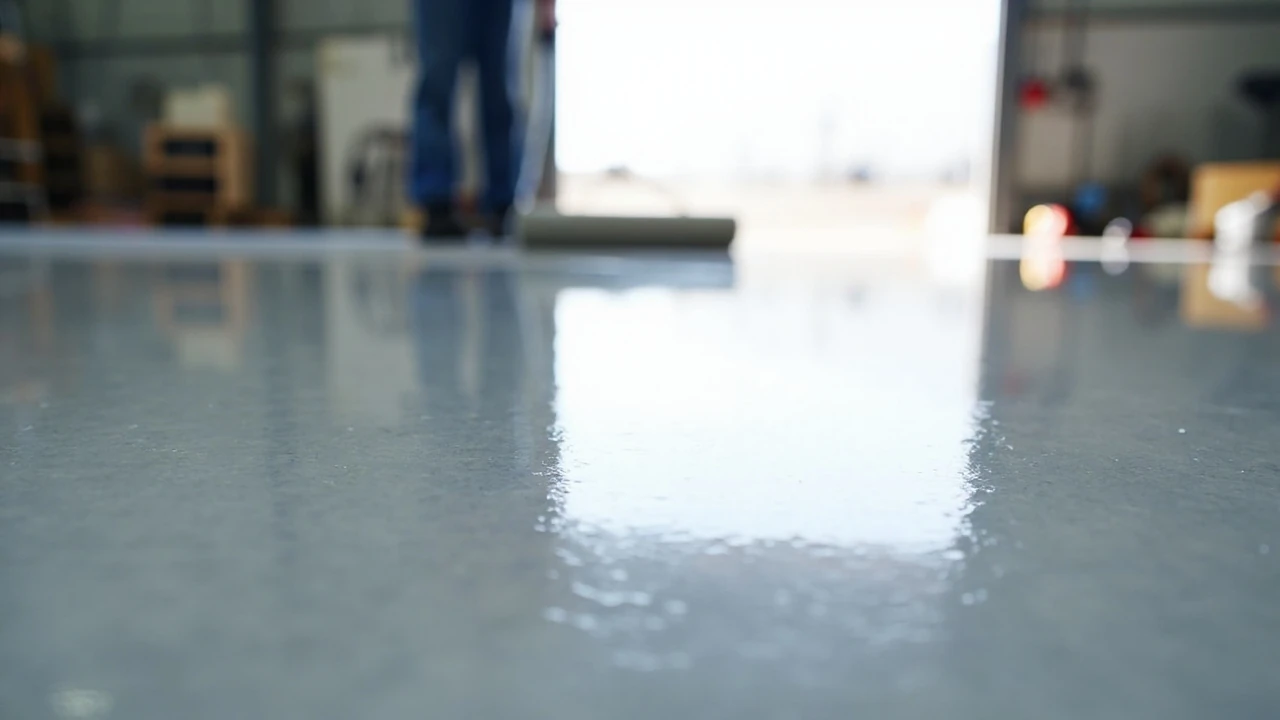
A polished gray floor in a working warehouse is rarely just paint. When the surface is seamless, dust-free, and resistant to spilled coolant, it is almost always a resin system, and the most common type in light industrial and commercial buildings is a lantai epoxy. Understanding how that system is built, what it can and cannot handle, and where it actually pays off helps a facility manager, homeowner, or contractor decide whether it is the right specification.
This guide walks through the practical side of lantai epoxy: how the layers work, the realistic thickness ranges, the environments where it performs well, the limits that show up in real buildings, and the decisions a buyer or specifier should make before pouring.
How a lantai epoxy system is built
An epoxy floor is not a single product. It is a stack of layers, each with a defined job, and the way those layers are combined is what determines performance. The technical descriptions from manufacturers such as Sika’s lantai epoxy page describe the same structure that most resin flooring suppliers follow: a primer, optional screed or mortar layers, and one or more top coats.
The primer is solvent-free, two-component epoxy that seals the concrete pore structure. Without a proper primer, the top coat can pull away from the slab, especially on porous or slightly damp concrete. Above the primer, a self-smoothing mortar or screed may be added for leveling or heavy-duty service. The final top coat then determines the look and the texture: smooth, broadcast with quartz for slip resistance, or filled with decorative granule for a terrazzo-style finish.
Each layer is usually measured in microns or millimeters, not in coats of paint. A primer might add only a thin film, while a self-smoothing mortar can add several millimeters. That distinction matters for anyone comparing quotes, because a low price often reflects fewer layers rather than a thinner version of the same product.
Common build-ups and what they actually do
Not every lantai epoxy is built the same way. The following table summarizes the most common configurations used in commercial and light industrial buildings, the realistic thickness range of each, and the type of traffic it is designed to handle.
| System type | Typical thickness | Primary use | Traffic level |
|---|---|---|---|
| Thin-film epoxy top coat | About 500 microns | Sealing and dust-proofing on prepared concrete | Light foot traffic, low forklift use |
| Self-smoothing epoxy | 1.0 to 1.5 mm | Smooth finish on warehouses, production areas | Medium forklift and foot traffic |
| Decorative self-smoothing | About 3.0 mm | Showrooms, labs, offices with a finished look | Medium traffic with a focus on appearance |
| Epoxy mortar screed | 5 to 10 mm | Heavy abrasion, non-slip texture | Forklift traffic, wet processing areas |
| Epoxy modified cementitious screed | 1.5 to 3.0 mm | Self-smoothing underlayment on damp slabs | Used as a base layer, not a finished floor |
The thickness alone does not predict success. A 500-micron top coat on a weak slab will fail faster than a 3 mm system on a well-prepared, sound concrete surface. Substrate condition, moisture, and mechanical preparation usually matter more than the headline thickness in marketing material.
Where lantai epoxy genuinely performs well
Epoxy resin flooring earned its reputation in spaces where ordinary paint or tile would not survive. The following environments are the most consistent matches for a properly installed system.
- Warehouses and logistics areas where forklifts turn and brake, and where dust from uncoated concrete is a constant housekeeping problem.
- Production zones in food, beverage, and pharmaceutical plants that need a seamless, easy-to-clean surface and good chemical resistance.
- Laboratories and clinics that benefit from a continuous floor without grout lines, where spills can be wiped up quickly.
- Commercial kitchens and canteens that need a non-slip texture underfoot and resistance to oils, hot water, and cleaning agents.
- Parking decks and back-of-house ramps where a broadcast quartz or mortar build-up provides both traction and durability.
- Retail backrooms, back-of-house corridors, and offices that want the durability of resin with a more decorative top finish.
These are the environments where installers see the same system perform well for a decade or more, with only a re-coat on the top surface after several years of service.
Where epoxy flooring is the wrong choice
Resin floors are not a universal answer. Several conditions make a lantai epoxy a poor fit, and recognizing them early is cheaper than replacing a failed system.
- Substrates with rising moisture or no effective vapor barrier. Epoxy does not breathe, and moisture pushing up from below can cause blistering or full delamination.
- Outdoor slabs exposed to direct sunlight. Standard epoxy yellows and chalk under UV. A polyurethane or polyaspartic top coat is usually a better fit for exterior use.
- Surfaces that flex or move, such as suspended wooden floors or hollow-core panels without proper reinforcement.
- Areas with constant wet oily film that rely on a soft, cushioned feel underfoot. Anti-slip aggregates solve the grip but do not change the hard feel of the cured resin.
- Tenants who need a quick, weekend-only turnover in unconditioned space. Epoxy systems need stable temperature and proper cure time, not just a fast dry-to-touch surface.
Even within industrial buildings, the specifier should compare resin flooring against polished concrete, polyurethane cement, vinyl tile, or sealed concrete. Each has situations where it is the better answer.
Substrate preparation: the part most quotes undercount
Resin flooring lives or dies by what is underneath. The most common failure is not the resin itself, but poor preparation of the concrete. The slab must be structurally sound, clean, and profiled so the primer can key into it.
A standard preparation sequence looks like this:
- Mechanical preparation, usually diamond grinding or shot blasting, to open the concrete pore structure and remove laitance.
- Repair of cracks, spalls, and control joints with a compatible epoxy mortar or filler.
- Moisture testing, typically a calcium chloride or relative humidity test, to confirm the slab is dry enough for the chosen primer.
- Vacuuming and tack-cleaning so dust does not contaminate the wet primer.
- Application of primer within the prepared window, before dust settles back onto the surface.
Skipping or rushing any of these steps usually shows up within the first year as peeling, bubbles, or soft spots. A quote that prices the resin but ignores preparation is not a complete quote.
Moisture, primers, and temporary moisture barriers
Moisture is the single biggest threat to a lantai epoxy. The most useful tool for a damp slab is a modified cementitious epoxy primer used as a Temporary Moisture Barrier, typically applied at about 2 mm thick. This layer buys time by stopping moisture vapor from pushing into the resin build-up above it, and it allows the installer to move forward on slabs that read above 4 percent moisture.
The barrier is not a permanent waterproofing layer. It is a working solution that allows the rest of the system to be installed under controlled conditions. If the building has an active water leak or hydrostatic pressure, the source of the water must be fixed first. A resin floor is the wrong tool for an unresolved structural water problem.
Slip resistance, texture, and the broadcast decision
Slip resistance is not automatic. A smooth, glossy lantai epoxy is visually appealing but can be slick when wet. Most commercial and industrial specs solve this by broadcasting a graded quartz or aluminum oxide aggregate into the wet top coat and then sealing it under a clear finish.
The texture level is adjustable. A fine broadcast gives a satin feel suitable for offices and labs, while a heavy broadcast creates an aggressive, gritted surface for production floors and parking decks. The trade-off is clear: more texture means more grip and better drainage, but it also means harder to clean and a slightly darker, less reflective look.
For commercial kitchens, ramps, and outdoor transition zones, the pendulum test or a recognized slip-rating standard is often required by the specifier. The texture of the floor is part of meeting that requirement, not an optional upgrade.
Chemical and mechanical resistance: what to expect
Cured epoxy resists a wide range of common chemicals, including diluted acids, alkalis, fuels, oils, and many solvents used in industrial cleaning. It also stands up well to abrasion from wheeled traffic and to the impact of dropped tools in a working environment.
Limits exist. Prolonged exposure to strong solvents such as methylene chloride or to concentrated oxidizing acids can stain or soften standard epoxy. In those cases, a vinyl ester or novolac top coat is the typical step up. For thermal shock, such as hot wash-down in a food plant, a polyurethane cement system is often a better fit than standard epoxy.
The realistic expectation is that a properly installed lantai epoxy in a typical commercial space will look good for five to ten years before needing a maintenance re-coat, and the slab beneath will last much longer if the system is renewed in time.
Comparing lantai epoxy to other common flooring systems
Buyers often ask how epoxy stacks up against alternatives. The table below compares the most common options on the points that matter most in a working building.
| Criterion | Lantai epoxy | Polished concrete | Polyurethane cement | Vinyl tile or sheet |
|---|---|---|---|---|
| Seamless surface | Yes | Yes | Yes | No, seams at joints |
| Slip resistance options | Adjustable with broadcast | Low unless treated | Built-in texture | Manufacturer rated |
| Chemical resistance | Good to very good | Limited | Excellent, including thermal shock | Varies by product |
| Repairability | Spot repair and re-coat possible | Re-polish, hard to patch | Specialist repair | Tile replacement |
| Typical install time | 3 to 7 days for full system | Several days, dust-heavy | Similar to epoxy | Fastest for small areas |
| Best fit | Warehouses, labs, commercial back-of-house | Retail, big-box, light industrial showrooms | Food plants, commercial kitchens, pharma | Offices, healthcare rooms, light retail |
Each option has a place. The mistake is to choose a system by appearance alone rather than by the actual service environment.
Cost drivers a specifier should understand
Quotes for lantai epoxy vary widely because they bundle different things. A useful comparison breaks the cost into the categories below, even if the final invoice does not list them separately.
- Surface preparation, which is often the largest line in a serious quote and the easiest one to underbid.
- Moisture mitigation, including primers or Temporary Moisture Barriers if the slab is damp.
- Build-up thickness and number of layers, since a 3 mm self-smoothing system uses significantly more resin than a 500-micron top coat.
- Aggregate broadcast or decorative finish, which adds both material and labor.
- Edge detail, coving, drains, and termination at doorways or walls.
- Surface maintenance, since most resin floors benefit from a re-coat every several years rather than waiting for full failure.
A quote that is dramatically lower than the others usually has one of these lines understated. That is not always a bad thing, but it deserves a conversation before signing.
Common installation mistakes and how to avoid them
Most failed epoxy floors trace back to a small set of recurring errors. Knowing them in advance is the best way to avoid paying for them later.
- Applying primer or top coat over a slab that is still dusty or contaminated with oil, curing compound, or old paint.
- Ignoring the dew point and ambient conditions during application, which leads to amine blush, pinholes, or improper cure.
- Mixing partial kits on site, which throws off the stoichiometric ratio and leaves soft, under-cured areas.
- Walking or driving on the floor before it has reached its full chemical cure, not just its dry-to-touch state.
- Skipping the moisture test because the slab “looks dry,” which leads to blistering months later when vapor pressure builds.
None of these are exotic problems. They are basic field discipline, and a competent installer will have a written procedure for each.
Maintenance that actually extends service life
A lantai epoxy is not maintenance-free, but it is much easier to maintain than uncoated concrete. The most useful routine is simple and consistent.
- Sweep or vacuum regularly to keep grit from acting as sandpaper under wheeled traffic.
- Mop with a neutral cleaner, avoiding harsh acids or solvents that dull the finish over time.
- Clean spills of aggressive chemicals quickly, even though the surface will tolerate them for a while.
- Inspect high-wear zones, such as forklift turning areas, every year and plan a re-coat before the top film wears through to the primer.
- Re-buff or re-coat traffic lanes in offices and showrooms every few years to refresh gloss and cleanability.
A planned re-coat after eight to ten years in a working warehouse is far cheaper than a full tear-out and replacement. Resin floors are designed to be renewed, not just replaced.
When to bring in a specialist
A small office storeroom with a sound slab and light foot traffic is well within the scope of an experienced general contractor. Several situations call for a specialist resin flooring applicator instead.
- Food, beverage, or pharmaceutical production areas with hygiene, drainage, and chemical-resistance requirements.
- Electrostatic dissipative or conductive floors for electronics, server rooms, or munitions handling.
- Heavy industrial traffic, including steel-wheeled carts or hot wash-down environments.
- Existing slabs with documented moisture problems, prior coatings, or unknown history.
- Phased installations in occupied buildings, where odor, noise, and downtime must be carefully managed.
Specialist applicators carry the testing equipment, the product range, and the field experience to handle these conditions without putting the rest of the project at risk. The added cost is usually a small share of the total project value.
Quick specification checklist before signing a quote
Before committing to an installation, run the following checks. They take an hour and frequently prevent the most expensive mistakes.
- Confirm the substrate condition, including a recent moisture test result.
- Match the system build-up to the actual traffic, chemicals, and cleaning method in the space.
- Agree on the texture level, from smooth to heavy broadcast, in writing.
- Clarify cure time, return-to-service date, and any temperature limitations during install.
- Ask for a written warranty that names the system, the area, and what is covered.
- Plan the maintenance re-coat schedule so the budget is real, not aspirational.
A lantai epoxy is a long-term asset when it is specified and installed against a clear set of requirements. The resin itself rarely fails on its own; it is the system around it that decides whether the floor looks good for ten years or needs replacement in three.
Frequently asked questions
What is a lantai epoxy made of?
A lantai epoxy is a resin flooring system built from two-component epoxy binders, primers, and optional aggregates. The epoxy resin reacts with a hardener to form a tough, seamless surface that bonds to a properly prepared concrete slab.
How thick should an epoxy floor be in a warehouse?
For medium forklift traffic in a typical warehouse, a self-smoothing build-up of about 1.0 to 1.5 mm is common. Heavier traffic, abrasion, or the need for a non-slip texture usually pushes the system into a 3 to 6 mm mortar or broadcast build-up.
Can epoxy flooring be installed over damp concrete?
Standard epoxy does not tolerate rising moisture. On slabs that read above the moisture limit, installers typically use a modified cementitious epoxy primer as a Temporary Moisture Barrier, applied at about 2 mm, before the rest of the system is laid.
How long does an epoxy floor last?
A properly specified and installed system in a commercial or light industrial environment usually lasts ten years or more before needing a full replacement, with a maintenance re-coat on the top surface after about five to eight years in busy areas.
Is epoxy flooring slippery when wet?
A smooth, glossy finish can be slippery when wet. Most commercial and industrial systems solve this by broadcasting a graded aggregate into the top coat, which provides a measurable slip resistance rating while still being easy to clean.
Can a lantai epoxy be repaired if it is damaged?
Small damaged areas can usually be cut out, re-primed, and patched with the same resin system. Larger failures are typically handled by grinding back to sound material and re-applying the build-up. Full replacement is rarely necessary if the original slab is still in good condition.
How long before the floor can be used after installation?
Light foot traffic is often possible within 24 hours, but full chemical cure takes several days. Forklift or vehicle traffic is usually allowed after about three to seven days, depending on temperature and the specific product used.
What is the difference between epoxy and polyurethane flooring?
Epoxy is hard, abrasion-resistant, and bonds very well to concrete. Polyurethane is more flexible, more UV stable, and handles thermal shock better, which is why it is often used in food plants or outdoor areas. Many systems combine both, with epoxy as the build-up and polyurethane as the top coat.
Does epoxy flooring yellow in sunlight?
Standard aromatic epoxy does yellow and chalk under direct UV exposure. For areas with significant daylight or outdoor use, a UV-stable top coat, such as an aliphatic polyurethane or polyaspartic, is the typical solution.
How do I choose the right installer for a lantai epoxy?
Look for documented experience with the specific system you are specifying, evidence of recent moisture testing on similar projects, a written warranty that names the system and the area, and a clear maintenance plan. The lowest price rarely reflects the most complete scope of work.
Leave a Reply