
To get rid of roaches, identify what is present, find where activity is concentrated, and remove the food, water and shelter supporting it. If a pesticide is needed, choose a product labeled for that pest and location. Keep monitoring afterward so you can tell whether the plan is working.
One insect running across a counter does not tell you how many are in the building or where they came from. Start by collecting useful information rather than spraying every room. The National Pesticide Information Center’s cockroach guidance recommends identifying the species and using integrated pest management, or IPM, before choosing a pesticide.
Identify the insect before choosing a treatment
Take a clear photograph or keep a specimen safely contained for identification by a county extension office or pest professional. A description such as “small brown bug in the kitchen” is not enough to establish the species. Young cockroaches can also look different from adults.
The University of California’s IPM guide distinguishes species that live and breed indoors, such as German and brownbanded cockroaches, from outdoor species that can enter buildings. That distinction affects where to look for the source. An insect found near a drain is not, by that fact alone, proof of a sewer problem.
Roaches are mostly active at night, but a daytime sighting should prompt inspection rather than a confident estimate of the infestation. Avoid diagnosing the scale from a single encounter, a smell or a photograph of droppings.
Use monitors to find the active areas
Sticky cockroach monitors can help locate activity and collect specimens. UC IPM recommends placing them along edges and near likely hiding areas, then checking them daily at first. Keep them where children and pets cannot reach them.
Label each monitor and record its location. For example, your notes might have columns for the date, monitor number, location and catch count. Keep the setup reasonably consistent when comparing results. Moving every monitor to a new position makes a before-and-after comparison harder to interpret.
A monitor catches insects that encounter it; it does not count every roach in the home. A low catch in one place is not proof that the rest of the building is clear. Use the pattern to decide where further inspection is needed, and share it with a professional if you ask for help.
Remove accessible food, water and hiding places
Work on the conditions you can change safely. Wipe up food spills, keep stored food in suitable sealed containers and remove food waste regularly. Reduce unnecessary cardboard and other clutter. Report or repair leaks rather than allowing water to collect beneath a sink.
These measures are part of the NPIC’s IPM advice. They support treatment but do not mean an infestation is someone’s moral failing, or that a spotless counter rules one out. In a shared building, conditions outside your apartment may also need attention.
Clean accessible areas around appliances without disconnecting utilities or dragging a gas range away from the wall. If inspection requires access behind fixed equipment, arrange appropriate help. Ask a suitable tradesperson to assess gaps around services; do not seal required ventilation openings or open electrical fittings to apply pest-control material.
If you use bait, follow that product’s label
UC IPM identifies insecticide gels and bait stations as useful options for cockroaches. Product choice, permitted placement and follow-up still matter. A station placed away from all observed activity may tell you little about whether its bait would be suitable elsewhere.
There is no universal pea-sized dose, line length or reapplication interval for every gel. Read the label before purchase and follow its directions for the particular product. Do not copy a quantity from a different brand or assume that more bait gives faster control.
If control is poor, review identification, placement and the conditions in the building. NPIC also notes that resistance or bait aversion may be involved. That calls for reassessment, not an improvised mixture of several pesticides. Keep a record of what has been used so a professional can review it.
Dusts are not harmless alternatives
Boric-acid products are pesticides. The NPIC boric-acid fact sheet describes exposure risks and emphasizes keeping products out of children’s reach according to the label. Do not scatter powder over floors or food-contact surfaces, or remove outlet covers to place it inside an electrical fitting.
Diatomaceous earth also needs careful product selection and handling. According to the NPIC fact sheet, its dust can irritate the nose and eyes, and exposure can occur during application or before airborne dust has settled. A “natural” description is not permission to breathe it in or to ignore the directions.
If you cannot place a product exactly as its label permits while preventing access by people and animals, choose another approach or ask a qualified pest professional. This guide does not prescribe dust application in wall voids or recommend a home-mixed bait recipe.
Why bug bombs are a poor default
UC IPM advises against foggers, bug bombs and aerosol sprays for cockroach control because they can be hazardous and may disperse insects without solving the problem. Do not use an aerosol to “flush” a cavity as a routine preparation for dusting.
The EPA’s fogger warning describes fire and explosion risks from flammable propellants, as well as exposure hazards. Using more cans is not a way to compensate for an uncertain diagnosis. A targeted plan based on identification and inspection is preferable to treating the whole room by default.
Keep children, pets and other occupants in the plan
The EPA’s pesticide-safety guidance says to read and follow labels, keep children and pets away from treated areas, and use only products approved for the intended indoor location. Outdoor products must not be brought indoors as a stronger substitute. Store pesticides in their original containers and follow disposal instructions.
A closed bait station is not a universal guarantee of safety. Consider whether a child can move it, a pet can chew it or someone might mistake an unmarked product for something else. Follow the product-specific precautions and tell the pest professional about household circumstances before treatment.
Do not assume that a pet eating a treated insect is harmless in every case. If a possible exposure occurs, follow the label’s first-aid directions and promptly seek advice from Poison Control or a veterinarian, as appropriate. Keep the packaging available so the adviser can identify the product. Serious symptoms need urgent medical attention.
In an apartment, involve the building manager
Report sightings and relevant maintenance problems, including leaks, with dates and locations. NPIC recommends coordination with neighbors and the landlord because one household may not be able to eliminate a shared problem alone. Ask how inspections and follow-up will be coordinated.
Keep a written record of treatments within your unit and tell the professional about them. Avoid assuming that a repeating sighting proves which neighbor is responsible. Questions about payment, repairs or landlord duties depend on local rules and the circumstances; this article does not assign legal responsibility.
Judge progress by observations, not a promised finish date
There is no reliable six-to-eight-week guarantee for every home. Continue recording activity and follow the chosen product’s instructions or the professional’s plan. Fewer sightings can be encouraging, but stopping all observation as soon as you stop seeing insects leaves you with little evidence of what happened.
If catches remain steady, spread to new locations or return after treatment, arrange a review rather than automatically applying more of the same product. Bring your photographs, monitor notes and product details. Ask the professional what has been identified, which source conditions need correction and how the follow-up will measure results.
For a serious or recurring problem, or when safe application is difficult, seek a qualified pest-management professional early. You do not need to wait through an arbitrary month of unsuccessful treatment. Our guide to pest-control services discusses the service side of hiring help; more household topics are collected in Home Pest Control.
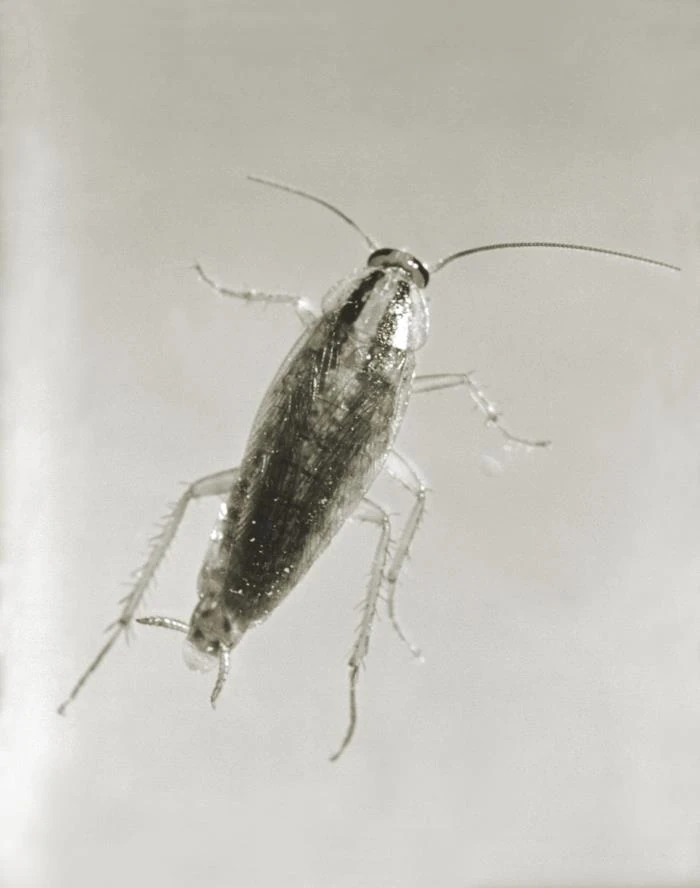
Illustrative dorsal view of a German cockroach, Blattella germanica: CDC, Public Health Image Library, image 28479. Public-domain image supplied by CDC; converted to WebP. It is not a photograph from our inspection or identification of an insect in your home. CDC does not endorse this website or a particular treatment.
Leave a Reply