
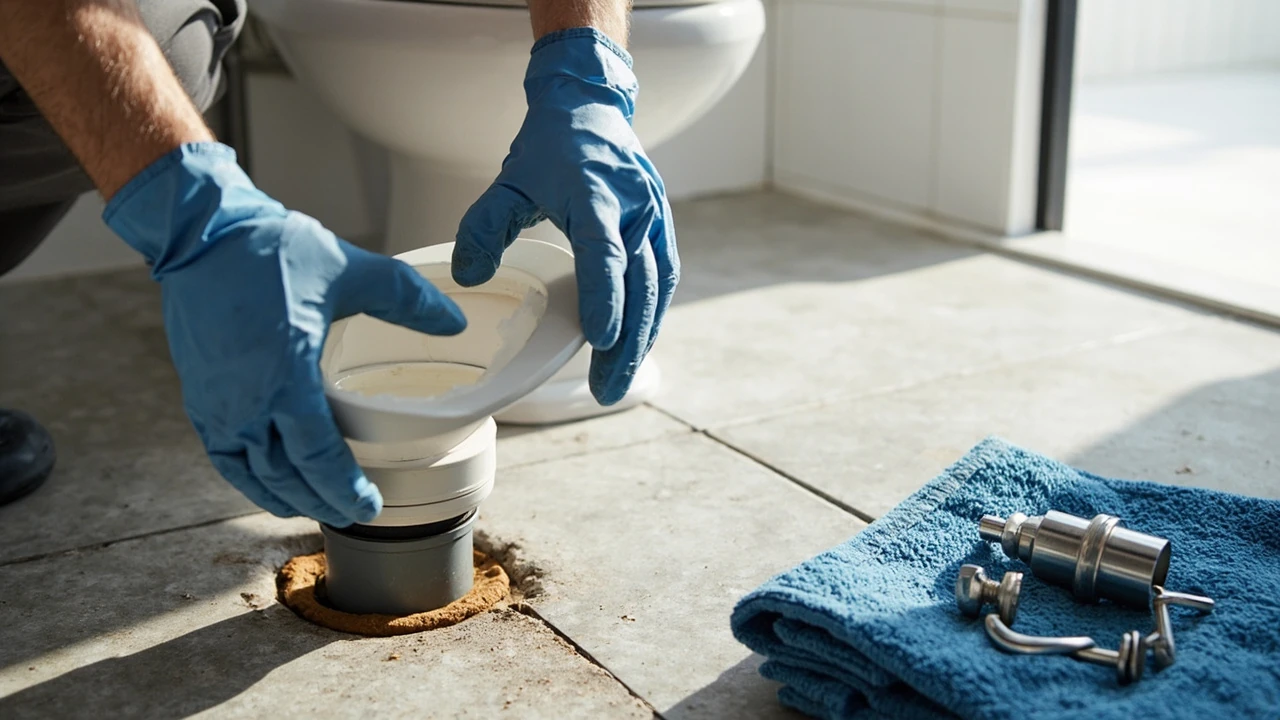
Closet flange: the small fitting that holds the toilet in place
A wobbly toilet, a faint sewer smell, or water staining around a toilet base often traces back to a single, often-overlooked fitting. The closet flange sits between the toilet and the drain pipe, anchors the toilet to the floor, and seals the connection that keeps wastewater and odors out of the bathroom. When it works, nobody thinks about it. When it fails, it becomes the most important part of the toilet.
For homeowners, remodelers, and anyone planning a bathroom project, understanding how a closet flange works makes it easier to spot early warning signs, decide between repair and replacement, and avoid the kind of slow leak that quietly damages a subfloor. This guide walks through what a closet flange is, how it is installed, the materials and styles you will encounter, the problems that shorten its service life, and the practical decisions involved in replacing one.
What a closet flange actually does
A closet flange is a pipe fitting that does three jobs at once. It mounts the toilet to the floor, connects the closet bend to the drain pipe, and provides a flat sealing surface for the wax ring that sits between the flange and the base of the toilet. The name is a holdover from the older term “water closet,” the traditional name for a toilet.
Without a working closet flange, the toilet would have nothing solid to bolt to, and the drain connection would have no reliable seal. That combination is what makes the fitting so important: it carries the mechanical load of the toilet and keeps the plumbing connection watertight and gas-tight at the same time.
During normal use, the flange does not move. The toilet sits on top of it, the wax ring compresses between the two surfaces, and two closet bolts lock the assembly down. Every time the toilet is flushed, the drain pipe carries waste through the hub of the flange into the branch line. The flange is meant to be a permanent part of the drain system, not a consumable part of the toilet.
Materials, shapes, and sizes you will encounter
Closet flanges are made from a handful of materials that match the rest of the drain system. Each material has practical trade-offs in cost, corrosion resistance, and how it is joined to the pipe.
| Material | Common use | Joining method | Typical trade-offs |
|---|---|---|---|
| PVC | Modern residential drains | Solvent-welded hub glued to the drain pipe | Lightweight, affordable, widely available; can crack if the toilet rocks or the subfloor flexes |
| ABS | Residential drains in many U.S. regions | Solvent-welded hub glued to the drain pipe | Similar performance to PVC; regional code preferences vary |
| Cast iron | Older homes, multi-story buildings | Lead and oakum joint, or no-hub coupling | Very durable and quiet; heavier and harder to modify during a retrofit |
| Brass | Repair situations, older homes | Soldered or threaded connection | Long service life; more expensive and increasingly hard to source |
| Stainless steel | Premium or corrosive environments | No-hub coupling, compression ring, or welded | Excellent corrosion resistance; cost is the main limitation |
Beyond material, the physical shape of the flange matters for installation. A standard “regular” closet flange is sized for a typical 3-inch or 4-inch drain stub-out and sits on top of the finished floor. A deep-flange or “offset” version shifts the toilet a small distance forward, backward, or side to side, which is useful when the rough-in drain does not line up with where the new toilet needs to sit. Repair flanges, sometimes called “spacer flanges” or “flange extenders,” stack on top of an existing flange when the original sits below the finished floor, often because a new tile or thicker underlayment was added after the original install.
How a closet flange is supposed to be installed
A correct installation is straightforward in concept, but every step matters because the fitting is the only barrier between the bathroom and the drain system.
- The drain pipe is cut to the correct height, usually flush with or slightly above the subfloor, so the flange hub can fully engage the pipe.
- The flange is positioned so its hub seats over the drain pipe, and the mounting holes line up where the closet bolts will sit.
- The flange is secured to the subfloor, not the finished floor, using stainless or coated screws driven into the framing below. Wood subfloors, concrete, and existing tile each call for different fasteners and sometimes anchors.
- A wax ring, or a waxless seal of equivalent size, is centered on the flange with the bolts standing upright.
- The toilet is set down over the bolts and pressed firmly into the wax ring so the seal compresses evenly.
- Washers and nuts are tightened onto the closet bolts only until snug, then the base is caulked around the front and sides, leaving a small gap at the back as a leak indicator.
The detail that is most often missed is the height of the flange relative to the finished floor. Building codes and the manufacturers of wax rings both assume the flange sits on top of the finished surface. If tile or a new underlayment has raised the floor and the flange is now below the surface, the wax ring cannot compress correctly, and the seal will eventually fail.
Signs that a closet flange is failing
Flange problems usually show up slowly, which is why they are easy to dismiss. A small leak at the base of a toilet can wet the subfloor for months before any water becomes visible on the floor. The most common warning signs are worth recognizing early.
- Water pooling at the base of the toilet after flushing, especially if the toilet itself does not appear to be running.
- A persistent sewer or musty odor near the toilet, even after cleaning, which suggests the wax seal is no longer gas-tight.
- A toilet that rocks or shifts when sat upon, indicating the bolts are no longer holding the toilet flat against the flange.
- Visible cracking, chipping, or splits in the flange ring when the toilet is removed, often discovered during a remodel.
- Stained or soft flooring around the toilet, which usually means a slow leak has been active for some time.
- Closet bolts that spin in place rather than tightening, which is a sign the flange’s metal ring has corroded or broken.
These symptoms do not always mean the flange is the only problem. A rocking toilet can also be caused by an uneven floor, a worn wax ring, or loose closet bolts. The only reliable way to confirm a flange issue is to remove the toilet and inspect the fitting directly.
Repair or replace: the real decision
Once the toilet is off and the flange is visible, the question becomes whether to repair the existing fitting or replace it. The right answer depends on the material, the damage, and the relationship between the flange and the finished floor.
| Situation | Likely solution | Why |
|---|---|---|
| Flange is intact and sits on top of the finished floor | Reset with a new wax ring and new closet bolts | The fitting is sound; the seal simply failed |
| Flange sits below the finished floor by less than about 1/2 inch | Use a flange spacer or extension ring | Raises the sealing surface without altering the drain connection |
| Flange sits well below the finished floor or the pipe is damaged | Replace the flange | An extension cannot bridge a large gap, and a damaged pipe needs a proper repair |
| Flange has a small crack but is otherwise solid | Use a repair ring or metal backup ring | A metal reinforcing ring can restore bolt-holding strength without full replacement |
| Flange is corroded, split, or missing chunks | Replace the flange | The structural integrity of the fitting is compromised |
| Cast iron flange in an older home | Often replace with a PVC or no-hub transition | Specialty fittings make the transition without disturbing the rest of the cast iron stack |
The decision is rarely about brand or style. It is almost always about height, structural integrity, and whether the existing pipe can be reused. A flange that is below the finished floor, cracked at a bolt slot, or corroded through is no longer doing its job, and patching over the problem usually returns within a year or two.
Wax rings, waxless seals, and why the seal matters
The wax ring is the part of the system that takes the most abuse, even though it is the cheapest component. A standard wax ring compresses between the flange and the toilet horn, fills small gaps, and forms a watertight and gas-tight seal. Once compressed, it cannot be reused. Every time the toilet is removed, the wax ring should be replaced.
Waxless seals, usually made of rubber or a rubber-foam blend, are a popular alternative in remodeling work. They are reusable in some designs, easier to handle, and less sensitive to small height differences between the flange and the floor. They also tend to be more forgiving when the toilet will be set and reset a few times during tile work or vanity installation. The trade-off is that they are not always code-approved in every jurisdiction, and the heavier the toilet, the more important correct sizing becomes.
Whatever the seal choice, the rule is the same: the flange must sit at the correct height for the seal to work. A tall wax ring cannot fix a flange that is too low, and a thick waxless seal is not a substitute for a properly installed flange.
Common mistakes that shorten the life of a closet flange
Most premature flange failures are not caused by the fitting itself. They are caused by how the toilet was installed or by changes made to the floor around the toilet. A few patterns show up again and again.
- Tightening closet bolts until the porcelain cracks, which transfers the structural load to the flange instead of the floor.
- Caulking around the entire base of the toilet, which traps a slow leak inside the room and hides the early warning signs.
- Installing a new tile floor without raising or replacing the flange, leaving the sealing surface buried under the new surface.
- Reusing a wax ring during a reset, which never forms a reliable seal the second time around.
- Using the wrong fasteners for the subfloor, so the flange itself becomes loose over time.
- Ignoring a rocking toilet, which slowly works the bolts loose and cracks the flange ring.
Each of these mistakes is fixable, and most are inexpensive to correct. The cost comes from the leak that develops when they are left alone long enough to soak a subfloor or breed mold in a wall cavity.
How a closet flange is replaced
Replacement is a manageable project for a careful homeowner, but it is also a common place to call a licensed plumber if the drain pipe is cast iron, if the flange is glued deep into the system, or if local code requires a professional for any drain work. The general sequence is the same in most cases.
- Shut off the water, drain the toilet, and disconnect the supply line.
- Remove the nuts from the closet bolts and lift the toilet straight up off the flange.
- Scrape the old wax ring and any debris from the flange and the bottom of the toilet.
- Inspect the flange height, the subfloor condition, and the integrity of the drain pipe.
- Cut the old flange out if it is glued in place, or unbolt it if it is mechanically fastened.
- Dry-fit the new flange, confirm the height, and solvent-weld, solder, or mechanically couple it to the drain pipe as appropriate.
- Secure the flange to the subfloor with the correct fasteners, install new closet bolts, and set a new wax ring.
- Reset the toilet, tighten the bolts evenly, reconnect the supply, and test for leaks at the base.
The hidden cost in any flange replacement is rarely the fitting itself. It is the time spent correcting height problems, repairing a soft subfloor, or adapting the new flange to an older drain material. Building a small buffer into the plan for those surprises is usually wise.
Code, safety, and when to call a professional
Plumbing codes treat the closet flange as part of the drain system, not just a bathroom accessory, which means installation rules vary by jurisdiction. Common code requirements include the height of the flange above the finished floor, the type of sealant allowed, and the requirement for a full-sized vent or trap configuration in the surrounding drain. Local inspectors may also require a permit for any work that disturbs the drain pipe, even if the visible portion of the job looks minor.
A licensed plumber is the right call when the drain pipe is cast iron or another older material, when the flange is buried under several layers of flooring, when the subfloor shows signs of water damage, or when the homeowner is not comfortable solvent-welding or no-hub coupling the new fitting. The cost of a professional install is modest compared with the cost of a slow leak inside a wall or under a tile floor.
Frequently asked questions
What is a closet flange used for?
A closet flange mounts a toilet to the floor and connects the toilet’s drain outlet to the drain pipe. It also provides the flat sealing surface for the wax ring that prevents leaks and sewer gas from escaping into the bathroom.
Is a closet flange the same as a toilet flange?
Yes. “Closet flange” and “toilet flange” refer to the same fitting. The word “closet” comes from the older term “water closet,” which was the traditional name for a toilet.
How high should a closet flange sit above the floor?
As a general rule, the flange should sit on top of the finished floor, with the sealing surface roughly level with or slightly above the surface. Code language and product instructions vary, but installers typically aim for about 1/4 inch above the finished floor for a standard wax ring.
Can a closet flange be below the finished floor?
It can, but it is not ideal. A flange that sits below the finished floor usually means a new floor was added without adjusting the drain, and the wax ring cannot compress enough to seal correctly. A flange spacer or a full replacement is the usual fix.
Do all toilets use the same flange size?
Most residential toilets use a flange that matches a 3-inch or 4-inch drain pipe, and the spacing between the closet bolt slots is standardized. The rough-in distance from the wall to the center of the flange is what varies, usually 10, 12, or 14 inches.
How long does a closet flange last?
A properly installed flange in a stable subfloor can last the life of the drain system, often several decades. Problems usually start when the toilet rocks, when the subfloor flexes, or when a remodel changes the floor height without adjusting the flange.
Can a cracked closet flange be repaired instead of replaced?
Small cracks at the bolt slots can sometimes be stabilized with a metal repair ring, which restores the bolt-holding strength. Larger cracks, splits, or corrosion around the hub usually require a full replacement to keep the seal reliable.
What is the difference between a regular flange and an offset flange?
A regular flange centers the toilet directly over the drain pipe. An offset flange shifts the toilet forward, backward, or to the side by a small amount, which is useful when the rough-in drain does not line up with the desired toilet location.
Is a waxless seal as good as a wax ring?
Waxless seals work well in most residential installations, especially when the flange is at the correct height. They are easier to handle and reusable in some designs, but the seal still depends on a sound flange and a flat, stable floor underneath the toilet.
Should I caulk around the base of the toilet?
Most plumbers recommend caulking the front and sides of the toilet base while leaving a small gap at the back. The gap acts as a visible leak indicator so a slow failure is noticed before it soaks the subfloor.
A practical reminder before the project starts
Before any toilet is pulled or any flange is replaced, take a quick measurement of the flange height relative to the finished floor and a close look at the subfloor around the toilet. Those two checks decide most of the project. If the flange is at the right height and the wood around it is solid, a reset with a new wax ring is often all that is needed. If the flange is buried under a new floor or the subfloor is soft, a spacer or a full replacement is the honest answer, and the only one that will hold up over the next decade.
For homeowners planning a larger bathroom project, the closet flange is a good reminder that the visible parts of a bathroom only work because of the fittings hidden underneath. Treating the flange as a planned part of the remodel, rather than a surprise, is what separates a quick reset from a long-lasting bathroom. If a remodel also involves broader plumbing work, it is worth looking at the rest of the home’s drain and supply system at the same time, and a quick read of sewer line cleaning and working with remodeling contractors can help set expectations before the work begins.
Leave a Reply