
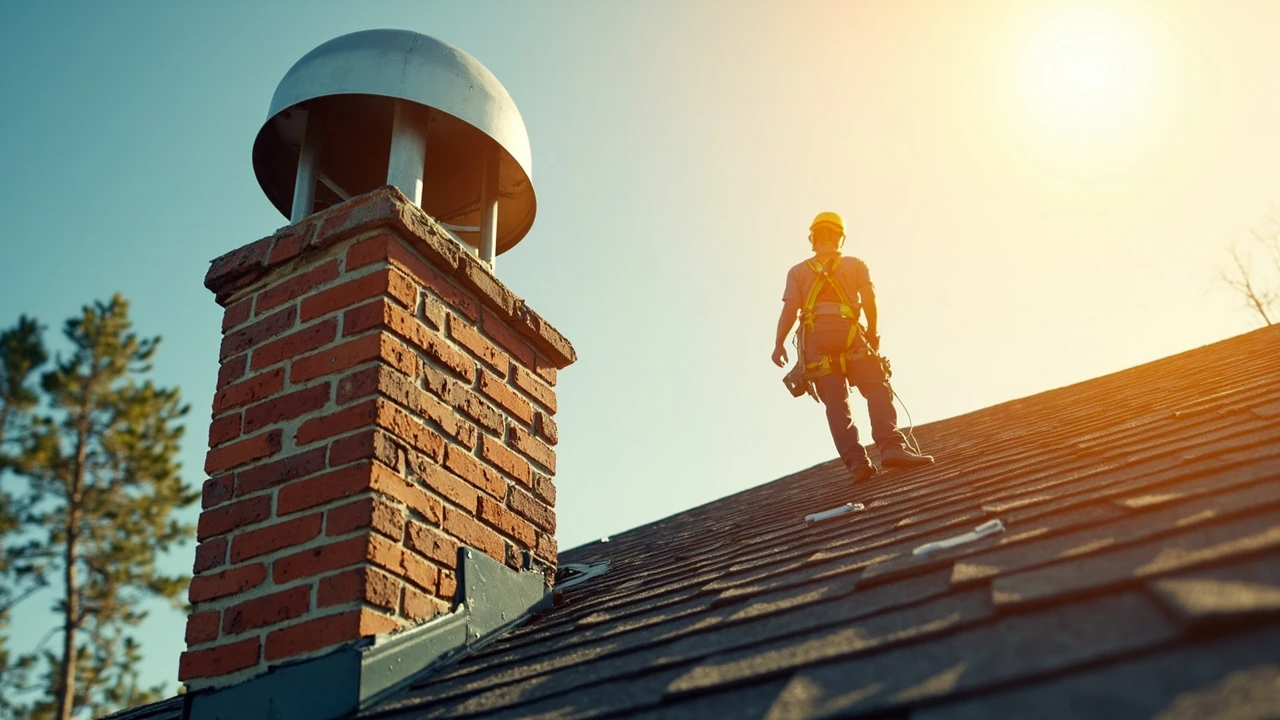
Chimney cap replacement cost: what homeowners actually pay in 2026
A rusted cap blowing in the wind, a raccoon scratching above the damper, water staining the firebox ceiling after every storm. These are the moments homeowners start typing “chimney cap replacement cost” into a search bar, usually after something has already gone wrong. Pricing in this corner of the trade is famously vague online, with ranges that swing from a couple hundred dollars to a couple thousand, so it helps to break the job into the parts a contractor is actually bidding on: the cap itself, the labor to reach the chimney, and the conditions on your specific roof and flue.
This guide walks through realistic 2026 price ranges for the most common chimney cap jobs, the choices that push a quote up or down, and the questions worth asking a chimney service before signing a work order. It is written for U.S. homeowners with a standard masonry or factory-built chimney serving one or two flues, not for commercial stacks or specialty industrial work.
What a chimney cap does and why replacement matters
A chimney cap is the metal cover that sits on top of the flue, usually with a mesh screen around the sides. The basic job is simple but important: keep rain, snow, animals, leaves, and stray sparks from entering the flue. When the cap is missing or damaged, every one of those threats reaches the liner, the damper, and the masonry directly. Water in particular is the slow-moving culprit behind most chimney repairs, because masonry absorbs it, then freezes and expands, then cracks from the inside out.
Replacement usually enters the picture for one of three reasons. The cap has rusted through and is falling apart, often visible from the ground as orange streaks down the flue tiles. A storm has bent or torn the cap, sometimes leaving it hanging by one leg. Or the cap is missing entirely, often after wind damage, which is the most urgent case because the chimney is now completely open to weather and wildlife.
For a deeper breakdown of cap styles, materials, and what to look for at the crown, the sewer line cleaning guide from this site uses the same approach of pairing an everyday homeowner problem with the right level of detail. A cap is a much smaller system, but the principle is the same: the part that fails first is the part that faces the weather.
The two pricing tiers most homeowners hit
Almost every chimney cap quote falls into one of two tiers, and the boundary between them is the number of flues. That single detail drives material cost, fabrication, and install time, which is why one homeowner pays a few hundred dollars and another pays four figures for what feels like the same part.
| Job type | Typical 2026 price range | What you are paying for |
|---|---|---|
| Single-flue cap, stock size, galvanized or stainless | $200 to $450 installed | Off-the-shelf cap, standard screws or clamps, single-trip labor on an accessible roof |
| Multi-flue custom cap, stainless steel | $900 to $2,500 installed | Custom-fabricated top measured to the chimney, heavier gauge steel, longer install window, often paired with a chase or crown inspection |
| Re-secure and re-seat an existing cap | $150 to $250 | Fasteners, sealant, labor only, no new cap material |
| Cap removal and disposal only | $75 to $200 | Stand-alone removal when the cap is dangerous and the homeowner is planning a larger chimney project |
These numbers reflect what U.S. chimney services commonly publish for residential work in 2026, and they line up with the kind of ranges you see from established regional contractors. The For additional context, Brown Chimney cap installation pricing page walks through the same single-flue versus multi-flue split and explains why a $375 single-flue cap and a custom multi-flue job are not really competing on the same product.
What drives the chimney cap replacement cost up or down
Two chimneys with the same number of flues can produce quotes that are hundreds of dollars apart. The difference usually comes down to a small set of variables that a contractor has to look at before giving a real number.
- Roof pitch and access. A single-story ranch with a walkable 4/12 pitch is a quick ladder job. A three-story colonial with a 10/12 pitch and no easy ladder landing point requires more safety setup, a second technician, and more time on the roof, which all show up in the labor line.
- Chimney height above the roof. A short chimney that barely clears the shingles is easy to reach. A tall chimney that rises four or five feet above the roofline needs longer fasteners, more working time at height, and sometimes staging.
- Cap material. Galvanized steel is the budget choice for single-flue caps and is fine for many homes, but it has a shorter service life. Stainless steel costs more up front and is the default for multi-flue work because the cap is custom and expected to last decades on a complex top.
- Single-flue versus multi-flue layout. Single-flue caps use a stock frame sized to common flue tiles. Multi-flue caps are built to cover two or more openings and the surrounding concrete crown, which is why they jump into the custom-fabrication price range.
- Crown condition. If the concrete crown under the cap is cracked or spalling, the cap has usually been failing for a while. Most contractors will flag this during the estimate, and a crown repair can add several hundred dollars on top of the cap price.
- Regional labor rates. Pricing in the Northeast and West Coast tends to sit at the high end of national ranges, while the Midwest and South often come in lower for the same work.
Homeowners comparing two written estimates are usually not comparing the same scope. Asking each contractor to spell out the cap part number, the material, the fasteners, and the labor hours in the quote makes the comparison meaningful instead of confusing.
Single-flue versus multi-flue: the decision that changes the quote
This is the single biggest cost driver on most homes, so it is worth a closer look. A single-flue chimney has one opening on the crown, usually a round clay tile or a metal flue pipe, and the cap is a small frame that drops over or clamps onto that one flue. A multi-flue chimney has two or more openings, often a masonry fireplace flue plus a furnace or water heater flue, sharing one crown.
| Factor | Single-flue cap | Multi-flue custom cap |
|---|---|---|
| Typical material | Galvanized or stainless steel | Stainless steel, often heavier gauge |
| Sizing | Stock sizes fit common flue tiles | Custom measured to the chimney crown |
| Average installed price | $200 to $450 | $900 to $2,500 |
| Lifespan with care | 7 to 15 years for galvanized, longer for stainless | 20 to 30 plus years for stainless |
| Best fit | One fireplace or one appliance on a simple chimney | Chimneys serving a fireplace plus a furnace or water heater, or wide chimney tops with two or more flues |
For a single-flue chimney on an easy roof, a stock stainless cap installed by a pro is a sensible, budget-friendly job. For a multi-flue setup, going custom is not really an upgrade, it is the right product for the layout, and it is why the chimney cap replacement cost on these homes is in a different range from the start.
Repair, re-secure, or full replacement
Not every cap problem calls for a new cap. A cap that is still structurally sound but has come loose can often be re-secured and re-seated with new fasteners and a bead of high-temperature sealant, which is the cheapest path. A cap with light surface rust but no holes can sometimes be cleaned, treated, and left in place for a few more seasons.
Replacement is the right call when the cap is rusted through, bent, missing mesh, or missing entirely. Once metal is perforated, the cap is no longer keeping water and animals out, and the damage is usually spreading to the crown and flue tile below it. At that point, repair is patching a part that has already failed, and most contractors will not warranty that work for long.
A quick rule of thumb that matches what most chimney services recommend in 2026: if you can see daylight through the cap from inside the firebox, if pieces are missing, or if the cap is leaning, plan on replacement rather than repair. A re-secure makes sense only when the cap itself is in good shape and the problem is purely the attachment.
What a professional installation actually includes
A cap replacement is short as service calls go, often under two hours on a straightforward roof, but a complete job has a few standard steps. Knowing what is on the checklist helps a homeowner judge whether two quotes are really offering the same work.
- Visual inspection of the flue, crown, and surrounding masonry before installing anything.
- Removal of the old cap and any failed fasteners left in the crown or flue tile.
- Measurement check on the new cap to confirm fit on the specific flue.
- Mechanical fastening with corrosion-resistant screws, clamps, or a bolt-on frame, never just adhesive.
- Seal at the base where the cap meets the flue or crown, using a high-temperature sealant rated for masonry and metal.
- Clean-up of old cap material and any rust debris from the roof and crown.
Items that sometimes show up as add-ons, and that a homeowner should ask about in advance, include crown sealing, chase cover work on factory-built chimneys, and any masonry repair needed because water has already reached the bricks. None of these are surprise fees if they are discussed before the work starts.
DIY versus hiring a chimney service
It is reasonable to think about a DIY cap swap, especially on a low, easily accessible single-flue chimney. The part itself is not complicated, and many home centers stock common sizes. The trade-off is that any work on a roof carries fall risk, and a poor seal around the base of the cap will let water straight into the flue, which is the exact problem the cap is supposed to solve.
Hiring a licensed and insured chimney service adds a labor line, often in the $150 to $300 range for a single-flue cap on an easy roof, but it also adds a professional seal, correct fasteners, and an inspection of the crown and flue while the cap is off. On multi-flue or steep-roof jobs, professional installation is the safer call and usually required to keep any meaningful warranty on the cap.
A useful middle ground is to have a chimney service inspect and quote first, then decide whether the same homeowner wants to do the swap if the quote comes in higher than expected. That inspection often catches a small crown crack or a wrong-size cap that would have turned a DIY job into a second service call.
How to read and compare chimney cap replacement quotes
Quotes for cap work are often one or two lines long, which makes them hard to compare. Asking for a slightly more detailed breakdown turns the estimate into a useful comparison tool.
- Ask for the cap part, including material, gauge, and whether it is stock or custom-fabricated.
- Ask for the labor line as a number of hours or a flat figure, so you can see what portion of the quote is the part versus the install.
- Ask whether the quote includes removal and disposal of the old cap, or whether that is a separate line.
- Ask about the crown condition and whether any masonry repair is included or quoted separately.
- Ask for the warranty terms on the cap and on the labor, in writing.
Two quotes that differ by a few hundred dollars often differ because one includes a stainless cap with a longer warranty and the other includes a galvanized cap with a shorter service life. Without a breakdown, the lower number is not always the better deal once the next replacement is factored in.
Frequently asked questions
How much does it cost to replace a chimney cap in 2026?
For a single-flue chimney on an accessible roof, most homeowners in 2026 will pay roughly $200 to $450 installed for a stock cap in galvanized or stainless steel. A multi-flue custom stainless cap typically runs $900 to $2,500 installed because the cap is built to the chimney’s exact dimensions.
What is the average price for a single-flue chimney cap?
The most common installed price for a single-flue cap on a one-story home with easy roof access is around $375, including the cap, fasteners, sealant, and labor. Steeper roofs, taller chimneys, and second-story access push that number toward $500 or more.
Why are multi-flue chimney caps so much more expensive?
Multi-flue caps are custom-fabricated from stainless steel and measured to the specific chimney crown, so the material, fabrication, and install time are all higher than for a stock single-flue cap. They also tend to be heavier, which adds to the labor of lifting and securing them on the roof.
Can a damaged chimney cap be repaired instead of replaced?
A cap that is merely loose or has light surface rust can often be re-secured, cleaned, and sealed for $150 to $250. Once the cap is rusted through, bent, missing mesh, or no longer keeping water out, replacement is the safer and longer-lasting option.
How long does a chimney cap replacement take?
A straightforward single-flue cap replacement on an accessible roof usually takes 45 minutes to two hours, including removal of the old cap and sealing the new one. Custom multi-flue work typically runs two to four hours because of measuring, fabrication checks, and the heavier install.
Is a stainless steel cap worth the higher price over galvanized?
For single-flue caps, stainless steel costs more up front but lasts significantly longer than galvanized, often 20 years or more with basic care, while galvanized may need replacement in 7 to 15 years depending on climate. For multi-flue custom caps, stainless is essentially the standard because the cap is built to last on a complex chimney top.
What are the signs that a chimney cap needs to be replaced?
Visible rust streaks down the flue tiles, a cap that is leaning or missing sections, pieces of metal on the roof around the chimney, water in the firebox after rain, and animal or bird activity in the flue are all common signs. If you can see daylight through the cap from inside the firebox, the cap has failed.
Do I need to replace the chimney crown when I replace the cap?
Not always, but it is worth inspecting whenever the cap is off. A crown with hairline cracks can often be sealed in the same visit for a modest add-on, while a crown that is spalling or has wider cracks usually needs a separate repair or rebuild that can add several hundred dollars to the project.
Will homeowner’s insurance cover chimney cap replacement?
Insurance typically covers cap replacement only when the damage was caused by a sudden event covered by the policy, such as a storm, fallen tree, or fire. Gradual wear, rust, and animal damage are usually considered maintenance and are not reimbursed. It is worth checking the specific policy and filing a claim if a covered event was the cause.
How often should a chimney cap be inspected?
A yearly visual inspection from the ground, combined with a closer look during the annual chimney sweeping, is enough for most homes. Caps in coastal or heavily wooded areas benefit from a check after major storms, since salt air and falling branches are the two biggest external causes of premature cap failure.
Leave a Reply