
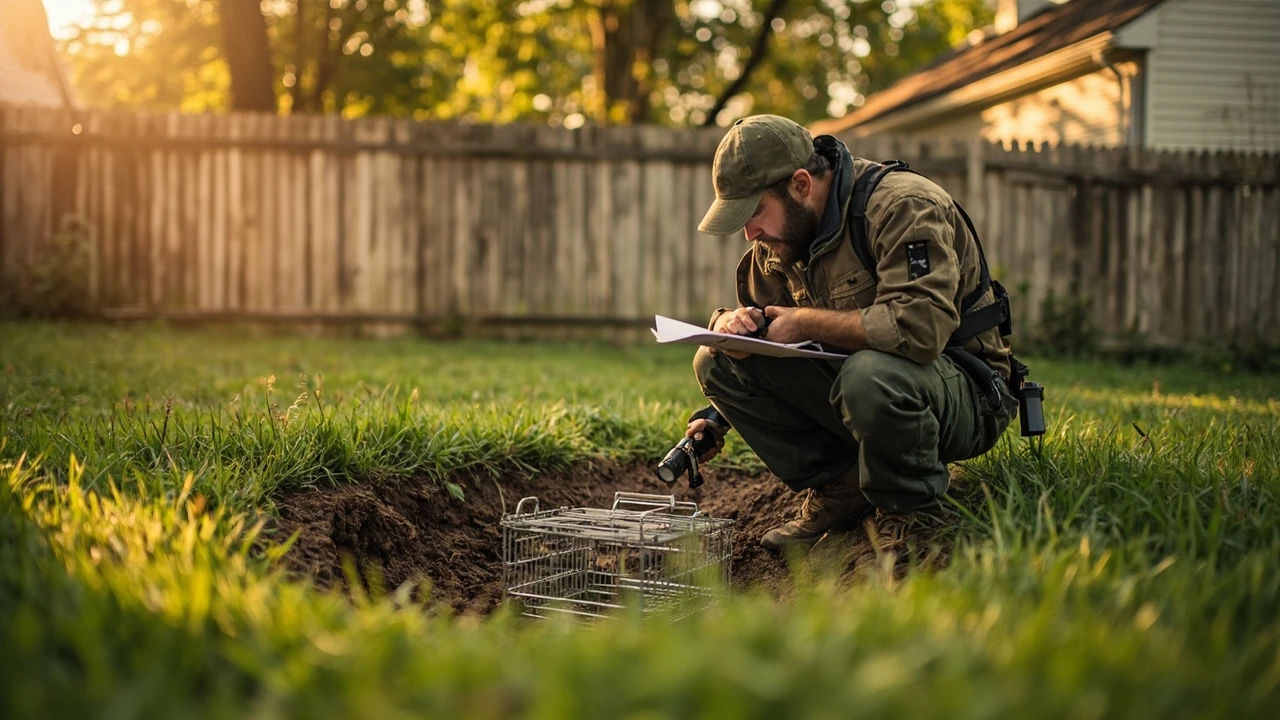
Groundhog removal cost: what homeowners actually pay
Groundhog removal cost is one of those numbers homeowners do not think about until a fresh mound of dirt shows up beside the garage or a soft spot opens under the back porch. The animal itself is rarely seen. What gives it away is the burrow entrance, the scattered soil, and the way a once-tidy lawn starts to look like it was visited by a small backhoe. Once a burrow is confirmed, the question quickly turns from what is digging here to what is this going to cost me.
Based on widely reported national cost guides, a single groundhog removal typically lands between $150 and $300, with most homeowners paying around $200 for an inspection, trap placement, and removal of one animal. Light work such as a one-time repellent application can run as low as $100, while a more involved job that includes fumigation, removal, repellent, and burrow filling can climb to about $550. Larger infestations, harder-to-reach burrows, and ongoing service contracts push the numbers higher.
This guide breaks down what actually drives the price, what each removal method involves, and how to think about the job without overpaying or under-treating the problem. It also covers the decisions that change the bill the most: how many animals are involved, where the burrows are located, and whether the work is a one-time visit or part of a recurring plan.
How groundhog removal cost is usually calculated
Wildlife and pest control companies generally do not quote a single flat fee. They look at the property, the infestation, and the method, then build a price from a few standard components:
- Inspection and assessment: confirming the species, locating burrow entrances, and checking for signs of activity. Some companies roll this into the job; others charge a small visit fee that is later credited toward the work.
- Removal method: live trapping, lethal trapping, fumigation, or a combination. Each one carries a different price tag and a different level of labor.
- Number of animals: a single groundhog is the baseline. Pairs, pups, and established colonies add time, visits, and equipment.
- Burrow location and access: a burrow in the open lawn is a different job from a tunnel system that runs under a deck, a shed, or a foundation.
- Follow-up and exclusion: repellent application, burrow filling, and any prevention work to keep the animals from coming back.
When you receive a quote, it is reasonable to ask for a written breakdown of these pieces. A vague single number is harder to compare across companies than a quote that separates the inspection, the removal, and any exclusion work.
Typical price ranges by method
Cost varies by region, season, and the company you hire, but the published national ranges give a useful baseline. The table below summarizes what homeowners commonly see for each main approach.
| Removal method | Typical cost range | What is included |
|---|---|---|
| One-time repellent application by a pro | $75 – $100 | Granular or liquid repellent sprayed on target vegetation and burrow openings. Effectiveness usually lasts a few weeks. |
| Lethal trap and removal (single groundhog) | $100 – $175 | Body-gripping trap set near the burrow, baited with food, and monitored by a licensed professional. Subject to state and local wildlife rules. |
| Live trap and relocation (single groundhog) | $150 – $250 | Cage trap set during the day near burrows, animal transported away from the property after capture. |
| Fumigation of burrows | $150 – $300 | Burrow sealed and treated with gas to kill or drive out the animals. Works best on fully sealed, accessible tunnel systems. |
| Full removal visit (inspection + trap + repellent + burrow fill) | Up to about $550 | Comprehensive service for a more complex job, including follow-up and exclusion work. |
These numbers are consistent with national guides such as Fixr’s groundhog removal cost guide, which describes a $150 to $300 range for a typical single-animal removal and higher figures for multi-visit or under-structure jobs.
How infestation size changes the bill
Groundhogs do not always live alone. A single sighting can mean a lone male, but it can also mean the start of a colony, especially in spring when pups are born. Most pricing tiers reflect that risk, and the size of the problem is the single biggest variable after the method.
| Infestation level | What it looks like on the property | Typical cost range | Common approach |
|---|---|---|---|
| Small (single groundhog) | One or two visible burrow openings, fresh soil mounds, light lawn damage. | $100 – $300 | Live or lethal trap, one or two visits, light exclusion work. |
| Medium (pair with pups) | Multiple burrow openings, some tunnel collapse in the lawn, damage to garden beds. | $200 – $400 | Trapping, removal of multiple animals, repellent application, and preventative exclusion. |
| Large (established colony) | Many burrow openings across the yard, damage to fences, trees, and possibly structures. | $400 – $1,000+ | Multiple visits, combination of trapping and fumigation, heavy exclusion and repair work. |
Homeowners often underestimate the size of the problem because groundhogs are secretive. A contractor who walks the property and counts burrow openings, checks for secondary holes, and looks at how recently the soil was turned will usually give a more accurate read than a quote based on a phone description.
Why burrow location matters more than people expect
The ground an animal lives under is just as important as the animal itself. Two yards with the same number of groundhogs can produce very different quotes if one burrow is in the open lawn and the other runs under a shed.
- Open lawn burrows: easiest to access and treat. Often resolved in one or two visits.
- Under elevated decks: moderate difficulty. Animals are often recently established and have not yet built deep tunnel networks.
- Crawl spaces under homes: more involved. Tunnels can reach 30 to 40 feet and require careful sealing and follow-up.
- Under sheds or homes with slab or shallow foundations: the hardest cases. Tunnels become difficult to reach, and treatments may need to be repeated.
Treatments of burrows under a home can run up to around $500 on their own, because the work involves longer tunnels, harder access, and more time on site. If a contractor can walk the property with you and point out exactly where they plan to set traps or apply treatment, the quote tends to be more accurate and the result more reliable.
One-time visit vs. ongoing contract
Not every groundhog problem needs a service plan. A single animal that wandered in from an adjacent field and a yard with no history of activity is often handled in a single visit. Properties with recurring pressure, nearby woodlots, or a previous infestation are different stories.
| Service type | Typical cost | When it makes sense |
|---|---|---|
| Single visit, no contract | $150 – $300 | First-time issue, isolated burrow, light pressure from surrounding habitat. |
| Annual plan (one yearly visit) | $100 – $200 per year | Property with mild, recurring activity, especially after an initial treatment clears the current population. |
| Seasonal contract (active months) | Varies, often priced per season | Properties where groundhogs show up predictably during spring and summer activity windows. |
| Quarterly visits | Varies by region | Recurring invasions where ongoing monitoring and exclusion are required. |
| Monthly plan | Highest recurring cost | Severe infestations, vulnerable structures, or properties with persistent pressure from nearby habitat. |
A contract is not required, and many homeowners start with a single visit and reassess after they see how the property responds. For properties where groundhogs are part of the local landscape, a yearly or seasonal plan is often cheaper over five years than a series of emergency one-time calls.
What a professional groundhog removal visit actually includes
Knowing what is in a typical visit makes it easier to compare quotes. A standard service usually follows a recognizable sequence.
- Initial inspection: the contractor walks the property, identifies burrow openings, looks for secondary escape holes, and notes any signs of activity or damage.
- Method recommendation: based on what they find, they suggest live trapping, lethal trapping, fumigation, repellent, or a combination.
- Trap placement or treatment: traps are set near active burrows with food bait, or burrows are sealed and treated with gas where appropriate.
- Monitoring and follow-up: traps are checked on a schedule that meets local rules, and additional visits are scheduled if more animals are caught or if activity continues.
- Exclusion work: once activity stops, burrows are filled, openings are screened, and the property is reviewed for conditions that could attract new groundhogs.
Homeowners can ask in advance how many visits are included, how long traps will be left in place, and what happens if a second groundhog is caught after the first visit. Those answers usually signal how experienced the company is.
Ways homeowners try to keep groundhog removal cost down
There is no shortage of do-it-yourself advice online, and some of it is genuinely useful for prevention. It is worth being honest about what homeowners can realistically do without raising other risks.
- Identify burrows early: a single burrow with one occupant is far cheaper to deal with than a colony that has been there for a season.
- Reduce attractive habitat: keeping brush piles, tall grass, and woodpiles away from the home reduces cover that groundhogs prefer.
- Install fencing before activity starts: buried wire mesh around garden beds and known runways can deter new animals.
- Ask about combined visits: if a contractor is already on the property for another wildlife issue, adding a groundhog assessment to the same visit can reduce the per-visit cost.
- Request a written exclusion plan: a clear plan for sealing burrows, screening openings, and addressing attractants reduces the chance of paying for the same problem twice.
There are also limits. Lethal control is regulated differently in every state, and live trapping often requires a license to relocate wildlife away from the property. Over-the-counter poisons and improvised gas treatments pose real risks to pets, children, and non-target wildlife. For most homeowners, the safest path is to let a licensed professional handle the removal and to focus DIY effort on prevention and habitat management.
How to read and compare quotes
Two quotes that look similar on paper can be very different in practice. A few practical questions tend to surface the real differences.
- Is the inspection fee separate, and is it credited toward the work if you proceed?
- How many visits are included, and what is the per-visit cost if more are needed?
- Is burrow filling included, or is that an additional line item?
- What guarantee or warranty period applies if activity resumes after the visit?
- What documentation will you receive, and is the work covered by insurance?
Comparing quotes by total number alone is tempting, but the answer to those questions often explains a $200 gap between two estimates. A lower quote that excludes follow-up visits and burrow repair can end up costing more than a higher quote that includes both.
When groundhog removal cost is worth treating as urgent
Most groundhog activity is a nuisance rather than an emergency, but a few situations justify faster action.
- Burrows near foundations or slabs: long-running tunnels can undermine footings, patios, and walkways over time.
- Burrows near retaining walls or septic systems: water can follow animal tunnels and accelerate damage.
- Active burrows in livestock areas: livestock injuries from collapsed holes are a real and recurring cause of farm losses.
- Multiple fresh burrows in a single season: a strong signal that the population is established rather than passing through.
For all of these, waiting a full season to see if the animals leave on their own usually makes the eventual job more expensive, not less.
Regional and seasonal factors that affect price
Groundhogs are most active from early spring through fall, and they hibernate through the colder months in most of their range. That cycle affects both the timing and the cost of removal work.
- Spring: active season begins. Pairs may already be established and pups arrive. Early action is usually cheaper.
- Summer: peak activity, more visible damage, and busier schedules for wildlife control companies.
- Fall: animals feed heavily before hibernation, and burrow openings are easy to spot. Late-season work often focuses on exclusion before winter.
- Winter: groundhogs are largely inactive. Some companies offer reduced rates for off-season exclusion and prevention work.
Regional pricing also reflects local rules. States and municipalities that restrict lethal trapping or relocation tend to have a narrower set of methods available, and that affects the per-visit price as much as the infestation itself.
What a realistic budget looks like
Pulling the numbers together, a reasonable working budget depends on the scale of the problem.
- Light, first-time issue: budget $150 to $300 for a single visit that includes inspection, one or two traps, and basic exclusion.
- Moderate infestation with multiple animals: budget $300 to $600, including multiple visits, a mix of methods, and burrow filling.
- Severe infestation or under-structure work: budget $500 to $1,000 or more, with the higher end reserved for multi-visit plans, fumigation, and repair of landscape or structural damage.
For most single-family properties, the first realistic number is the one that matters. If a contractor walks the property and gives a clear answer in the $150 to $300 range, that is usually the budget to plan around.
A short checklist before you book
Before scheduling a visit, a few quick checks make the appointment more efficient and the quote more accurate.
- Count visible burrow openings and note where they are on the property.
- Look for secondary escape holes, which often appear 10 to 20 feet from a main entrance.
- Check for damage to fences, decks, garden beds, or low sections of foundation.
- Ask neighbors whether they have seen groundhog activity, which can indicate colony pressure.
- Have a rough idea of whether you would prefer live removal or are open to other methods the contractor is licensed to perform.
That preparation does not change the biology of the problem, but it does change how much guesswork the contractor has to do on the first visit, and guesswork is what tends to show up later as an extra charge.
Frequently asked questions
What is the average groundhog removal cost for a single animal?
For a single groundhog, most homeowners pay between $150 and $300, with a national average around $200. The range covers an initial inspection, trap placement, and removal, with light repellent work on the low end and more comprehensive service on the high end.
Does groundhog removal cost more if the burrow is under a deck or shed?
Yes. Burrows that are difficult to access take longer to treat, often require more than one visit, and may involve more extensive exclusion work. Treatments of burrows running under a home can reach around $500 on their own because of the depth and length of the tunnels involved.
Is fumigation cheaper than trapping?
Fumigation is usually in a similar range to live or lethal trapping for a single animal, generally $150 to $300, but it works best when the burrow can be fully sealed. Large or branching tunnel systems can be harder to gas effectively, which sometimes requires a combination of methods.
Can I lower groundhog removal cost by doing prep work myself?
Homeowners can reduce cost by identifying burrow openings, clearing access to burrow areas, removing brush piles and other cover, and asking neighbors about activity in the area. Trapping, fumigation, and relocation are usually best left to licensed professionals because of the wildlife rules that apply.
Do I need a contract for groundhog removal?
A contract is not required. Many homeowners start with a single visit and then decide whether to add a yearly, seasonal, or quarterly plan based on what happens after. Properties with recurring pressure often save money over time by switching to a contract rather than calling for emergency visits.
Are lethal groundhog traps cheaper than live traps?
Lethal trapping tends to be slightly less expensive than live trapping, often in the $100 to $175 range for a single animal, because the animal does not need to be relocated. Lethal methods are subject to state and local wildlife laws, and many contractors only use them after other options have been considered.
How many visits does a typical groundhog removal job take?
A small job often takes one or two visits. Medium and large infestations commonly require multiple visits over several weeks, especially if new animals continue to appear or if burrows need to be revisited. The number of visits is one of the most important numbers to confirm in writing before work begins.
Does homeowners insurance cover groundhog removal cost?
Standard homeowners policies usually do not cover the cost of removing wildlife itself, but they may cover repairs to structures or utilities that the animals damaged. Coverage varies by policy, so it is worth checking with your insurer before assuming any of the work is reimbursable.
What time of year is cheapest to deal with a groundhog problem?
Off-season work, particularly in late fall and winter when groundhogs are less active, is sometimes priced lower because demand for wildlife services is lower. That said, the cheapest time to act is usually as soon as activity is noticed, because the infestation is smaller and the job is shorter.
What is the difference between a pest control company and a wildlife removal specialist?
General pest control companies handle insects and common rodents. Wildlife removal specialists are set up to deal with larger animals like groundhogs, including trapping, relocation where it is allowed, and exclusion work. For groundhogs specifically, a wildlife specialist is usually the better fit.
Leave a Reply