
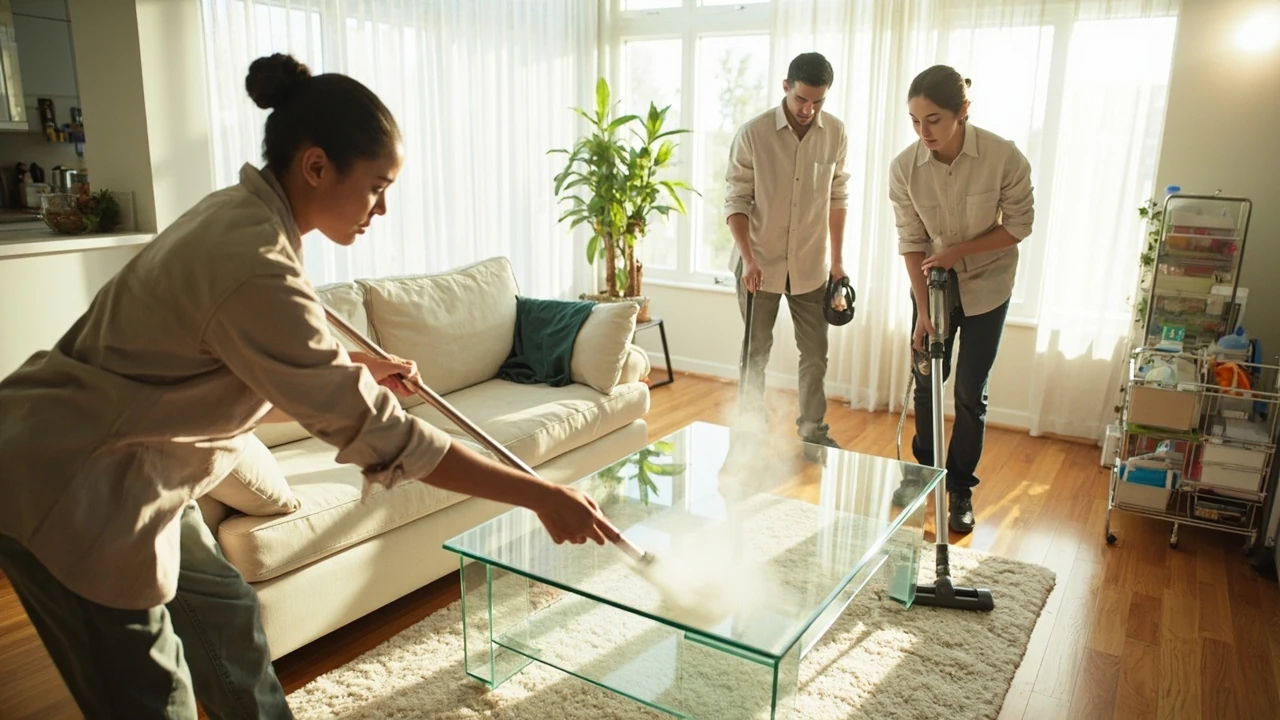
Cleaning service: how to choose the right one for your home
You walk in after a long day and the kitchen counter is still streaked, the bathroom mirror has water spots, and the floors feel gritty under your socks. Most homeowners reach a point where the weekly routine stops feeling manageable, and that is usually when a cleaning service starts to look less like a luxury and more like a practical tool. The challenge is not finding someone willing to clean; it is finding a team that is reliable, transparent, fairly priced, and actually good at the work.
This guide focuses on the decisions a homeowner has to make when hiring a residential cleaning service. It covers how a typical service operates, what is usually included and what costs extra, how pricing is built, what to check before signing a recurring contract, and how to handle common problems. It is written for people who have never hired professional cleaners before, as well as homeowners who have had a bad experience and want a more reliable setup.
What a cleaning service actually does
A residential cleaning service sends trained staff to your home on a schedule you set and performs a defined list of tasks. The most common models are weekly, biweekly, or monthly visits, though many companies also offer one-time deep cleans, move-in and move-out cleans, and post-construction cleans. The work is usually done by a two or three person team using products the company supplies, though some homeowners prefer to keep their own products on hand for allergy or scent reasons.
The standard visit focuses on kitchens, bathrooms, bedrooms, and living areas. Inside the job, tasks typically include wiping counters, cleaning appliance exteriors, scrubbing sinks and toilets, mopping hard floors, vacuuming carpets and rugs, dusting reachable surfaces, making beds with linens you leave out, and emptying trash bins. Windowsills, baseboards, ceiling fans, and light switches are usually included on a rotating basis rather than every visit.
A deep clean adds detail work that routine visits do not cover: inside the oven, inside the refrigerator, grout scrubbing, window interior cleaning, baseboard hand-wiping, vent dusting, and detailed bathroom scale removal. Most services recommend a deep clean as the first visit before starting a recurring schedule, because it resets the home to a baseline the regular visits can then maintain.
Types of cleaning services you can hire
Not every company is set up the same way. Knowing the difference helps you avoid paying for a model that does not match your needs.
- Solo operator or independent cleaner. One person, often with low overhead, who works alone or brings a helper. Pricing is usually lower and scheduling is more flexible, but insurance coverage, background checks, and backup coverage if they are sick are not always guaranteed.
- Small local company. A team of two to ten cleaners, usually bonded and insured, with a manager who handles scheduling and quality control. Reasonable pricing, more reliable backup coverage, and a clearer point of contact than an individual.
- Regional or national franchise. A branded company that operates across multiple cities. Standardized pricing, structured training, and corporate-level insurance. Pricing is usually higher, and the actual staff may rotate, but consistency and recourse are stronger.
- Specialty or niche services. Companies focused on a specific job, such as move-out cleans, post-renovation cleans, hoarding and restoration work, or eco-friendly cleaning using only non-toxic products.
For most homeowners, a small local company is the practical middle ground. Larger franchises make sense when you want standardized procedures and stronger corporate accountability. Solo operators can be a good fit if you vet them carefully and the home is small.
How cleaning service pricing is built
Most residential cleaning services price by one of three models, and understanding which one a company uses is the fastest way to compare quotes accurately.
| Pricing model | How it works | Best for | Watch out for |
|---|---|---|---|
| Hourly rate | Company charges a set hourly rate per cleaner; final bill depends on actual time on site | Smaller homes, one-time jobs, unclear scope | Final price can drift higher if scope expands; ask for an estimated range, not a single number |
| Flat rate by home size | Fixed price based on square footage, number of bedrooms and bathrooms, and home condition | Recurring visits with a stable scope | Heavily soiled homes or extra rooms may trigger surcharges; confirm what counts as a standard room |
| Per-task or per-room | Each task or room has a separate price, added together | Custom jobs, partial cleans, add-on services | Easy to over-order services; useful mainly as an a la carte menu on top of a base visit |
Three factors move the price up or down. Home size is the biggest driver, because more square footage means more time. Condition is the second: a home that has not been professionally cleaned in a year takes longer than one that has weekly maintenance. Pets, especially shedding dogs, usually add a small surcharge because of the extra vacuuming and hair removal involved.
For most suburban homes in the United States, a standard recurring visit runs in the range commonly seen across the residential cleaning market. One-time deep cleans and move-out cleans are typically priced higher than a standard visit because they include inside-appliance work, baseboards, and detail tasks. Asking for a written quote that lists the scope, the price, and the cancellation policy is the most reliable way to avoid surprise charges.
What is usually included in a standard visit
The included list varies by company, but a typical standard visit covers the following areas. Use this as a checklist when you compare two quotes side by side.
- Kitchen: counters, sink, stovetop exterior, appliance exteriors, cabinet fronts wiped, floor mopped, trash emptied.
- Bathrooms: toilet inside and out, sink, mirror, tub and shower, counters, floor mopped, towels straightened.
- Bedrooms: beds made with linens you leave out, surfaces dusted, floors vacuumed or mopped, trash emptied.
- Living areas: dusting of reachable surfaces, furniture vacuumed where needed, floors vacuumed or mopped, general tidying.
- Whole home: high-touch points wiped, trash collected, surfaces straightened, floors finished.
What is not usually included in a standard visit: inside the oven, inside the refrigerator, inside cabinets, interior windows, walls, laundry, dishes, ironing, and any task that requires moving heavy furniture. Some of these can be added as paid extras, others are scheduled as a separate deep clean every few months.
What to check before signing a recurring contract
The cheapest quote is rarely the best one. A few specific checks make the difference between a reliable long-term relationship and a string of disappointments.
| What to verify | Why it matters | What to ask |
|---|---|---|
| Insurance and bonding | Covers accidental damage or theft during the visit | Are you bonded and insured, and can I see a certificate of insurance? |
| Worker background checks | Reduces risk of theft and quality problems | Do you run background checks on every cleaner you send? |
| Supply policy | Determines whether you provide products or they do | Do you bring your own supplies, and is there a green or fragrance-free option? |
| Cleaning guarantee | Allows you to request a free re-clean if quality slips | What is your satisfaction or re-clean policy? |
| Lockout and access | Defines how cleaners enter when you are not home | Do you use lockboxes, coded entry, or key holding, and how is access tracked? |
| Holiday and weather policy | Clarifies how rescheduling works on bad weather days | What happens to my visit on holidays or severe weather? |
It is also worth asking who actually shows up. Some companies send the same small team every time. Others rotate staff based on availability. The first model gives you consistency. The second gives the company flexibility but usually produces a lower average quality of work.
How to compare two cleaning service quotes
When you receive two or three quotes, put them on equal footing before choosing. A lower number with a thinner scope is not a real saving if you end up paying for the missing tasks elsewhere.
- Confirm the square footage and number of rooms used in the quote. A quote based on 1,200 square feet is not comparable to one based on 1,800.
- Check whether the price is per visit or per month. Monthly contracts often bundle visits at a discount, but only if you actually use all of them.
- Ask what happens on the first visit. Many companies price the first deep clean higher and drop to the recurring rate afterward.
- Look for fees outside the headline price: travel fees, pet fees, supply fees, holiday surcharges, and cancellation fees.
- Confirm payment terms: per visit, monthly auto-pay, or pre-paid bundles. Auto-pay discounts are real but only if you plan to keep the service.
A reasonable comparison usually puts two companies within roughly 10 to 20 percent of each other once scope is matched. A quote that is dramatically cheaper often means a thinner scope, a single cleaner rather than a team, or a company that does not carry insurance.
Preparing your home before the first visit
National cleaning brands, such as ServiceMaster Clean, are part of a much larger commercial and residential cleaning industry with decades of history and standardized operating procedures. Their structure offers strong insurance, documented training, and a clear corporate escalation path if something goes wrong. For homeowners who want a process-driven experience and a single brand to call regardless of the city, a national company often fits.
The cleaner will be more effective, and the visit will take less time, if the home is reasonably prepped. A few small habits save real money on every visit.
- Pick up clothes, toys, and papers from floors and surfaces. Cleaners will work around clutter, but they will not organize it.
- Put away valuables, cash, and small electronics, either in a locked drawer or in a room that is off-limits.
- Leave clear notes about anything unusual: a broken blind, a stained rug, a pet that needs to be kept in another room.
- Decide on a supplies policy. If you want them to use your products, leave them on the counter; if not, confirm they bring their own.
- Secure pets. Even friendly dogs can block a vacuum cleaner for twenty minutes and slow the visit noticeably.
For the first visit, plan to be home, or at least reachable by phone. Most companies will walk the home with you to confirm scope and flag anything they want to clarify before starting. A five minute walkthrough prevents a long list of misunderstandings later.
Common problems and how to handle them
Even with a good company, problems come up. Knowing how to address them in advance makes the relationship last.
| Problem | Likely cause | Practical response |
|---|---|---|
| Quality dropped after the first visit | Different team or rushed job | Ask for the original team back, or invoke the re-clean guarantee in writing |
| Items moved or missing | Cleaners working around clutter they had to move | Declutter before visits, store valuables, and take photos of drawers if concerned |
| Price keeps creeping up | Flat-rate quote was based on a cleaner home than current reality | Ask for a written breakdown of what changed, and reset scope if needed |
| Visits are skipped or rescheduled often | Understaffed company or weak scheduling | Set a clear notice policy in the contract, and consider switching if it repeats |
| Damage to a surface or fixture | Accident, or wrong product used on a delicate finish | Report within 24 hours, file a claim under the company’s insurance |
The fastest way to resolve any of these is to keep a short, factual record. Photos of the issue, a one-paragraph description, and the date of the visit are usually enough for a good company to fix the problem quickly. Companies that dismiss complaints without offering a re-clean or a clear explanation are usually not worth keeping.
When it makes sense to stop using a cleaning service
A cleaning service is supposed to remove a chore, not add stress. It is worth ending the relationship, or at least pausing it, when any of the following become a pattern rather than an exception:
- The team arrives late or not at all, and the office is hard to reach.
- Quality is inconsistent from visit to visit, and re-cleans do not improve it.
- Pricing changes without a clear reason more than once a year.
- You feel uncomfortable having the team in the home, whether due to behavior, communication, or damaged trust after an incident.
- The financial cost no longer fits the household budget, and the time saved is not worth the trade-off.
Ending a contract cleanly is also a chance to leave useful feedback. A short, specific note about what did and did not work helps the company improve and helps the next homeowner who calls them.
Eco-friendly and allergy-friendly cleaning options
Households with small children, pets, asthma, or chemical sensitivities often need a different product setup. Most cleaning services can accommodate this, but it is worth asking how.
The simplest approach is to ask the company to use only fragrance-free, dye-free, and Green Seal or EcoLogo certified products. A few companies specialize in this approach, including franchises built around non-toxic methods. If someone in the home has a severe chemical sensitivity, the safest option is to provide the products yourself and label them by room, so the team uses the same products on every visit.
Microfiber systems, which clean effectively with little or no chemical product, are another common option. They reduce residue on surfaces, which matters for households that include babies or people with respiratory issues. Asking which system a company uses is a quick way to gauge how seriously they take the request.
How to budget for a cleaning service through the year
Most homeowners budget the recurring cost on a monthly basis and add the deep cleans and occasional extras separately. A simple framework helps keep the math clear.
- Standard recurring visits: the largest line item, usually a flat monthly cost paid weekly, biweekly, or monthly.
- Quarterly deep clean: scheduled every three months, prices higher than a standard visit.
- Annual heavy jobs: window interiors, gutter cleaning tied to the same visit, and post-holiday resets.
- One-time events: move-in, move-out, post-renovation, and real-estate listing cleans, priced separately.
Setting up auto-pay with a clear monthly cap, and reviewing the total once a quarter, prevents the cost from drifting. It also makes it easier to decide whether to scale back to biweekly from weekly, or to drop a quarterly deep clean if the budget tightens.
Working with a national brand versus a local company
Local companies, on the other hand, usually offer more flexible pricing, closer communication with the owner or manager, and a more personal approach to scope changes. For homeowners who want a consistent team, who prefer to support a small business, and who want to negotiate scope directly, a well-run local company is often the better fit. The trade-off is that recourse paths are shorter and insurance may be lighter, so checking those details becomes more important.
Access and security when you are not home
Most recurring clients are not home during visits. That makes access and security a real topic, not a detail.
- Coded entry: a four-digit code on a smart lock, changed between owners or after a security concern.
- Lockbox: a mechanical key box mounted discreetly, with the code held only by the office and the homeowner.
- Key holding: the cleaner or office holds a labeled key in a secure location, with a written chain-of-custody log.
- Alarm system: a temporary user code that is active only on the scheduled day, and disabled between visits.
Whichever method is used, two practices help: a written record of who has access, and a quarterly code rotation. Cameras inside the home are a personal decision, but a porch or entry camera is increasingly common and helps confirm arrival and departure times.
Questions to ask during the first walkthrough
The first visit is a two-way interview. The cleaner is checking the home, and the homeowner should be checking the team. A short list of direct questions is more useful than a long checklist.
- Who will be on the team, and will it be the same people every time?
- How long do you expect this home to take at the recurring rate?
- What is included and what is not, in writing?
- What is your re-clean policy if I am not satisfied?
- How are cleaners trained, and how long is the average tenure?
- How do you handle breakage, damage, or missing items?
A good company answers these questions directly. If the answers are vague, or if the company resists putting scope in writing, that is a useful signal on its own.
A short checklist before booking
- Confirm scope in writing: rooms, bathrooms, tasks, supplies, and any exclusions.
- Confirm the price: per visit, monthly, and any add-on fees.
- Confirm insurance, bonding, and background checks.
- Confirm access method and key or code handling.
- Confirm the re-clean and cancellation policy.
- Plan to be home, or reachable, for the first visit.
Frequently asked questions
How much does a cleaning service cost for a typical home?
For a standard suburban home with three bedrooms and two bathrooms, most recurring cleaning services price per visit within a range common to the residential market. The exact number depends on square footage, condition, pets, and the local market. The most reliable way to get a real number is to ask for a written quote based on your home, not a generic rate sheet.
How often should I schedule a cleaning service?
Weekly visits are common for busy households with children or pets. Biweekly is the most common cadence overall and keeps most homes in good shape. Monthly is enough for smaller homes with one or two adults and no pets. The right answer depends on how the home is used and how tidy the household stays between visits.
Do I need to be home during the cleaning?
No. Most recurring clients are not home. A coded lock, a key box, or a smart lock entry code allows the team to enter, work, and lock up. For the first visit, being home or reachable by phone is a good idea so the team can confirm scope and ask any questions before starting.
What is the difference between a standard clean and a deep clean?
A standard clean maintains a home that is already in good shape: surfaces, floors, kitchens, and bathrooms. A deep clean resets a home that has not been professionally cleaned in a long time and includes inside the oven, inside the refrigerator, baseboards, window interiors, and detailed bathroom work. Most companies recommend starting with a deep clean and then moving to a recurring standard schedule.
Should I tip the cleaning team?
Tipping is not required, but it is appreciated. A common approach is a modest tip per cleaner per visit, or a larger end-of-year tip for a team that has been consistent over many months. Some companies include a tip option in their payment system. The practice varies by region, and a quick check with the office clarifies the company expectation.
Are cleaning services insured if something is damaged?
Reputable companies carry general liability insurance and often bonding. If something is damaged during a visit, the homeowner should report it within 24 hours, ideally with a photo, and ask the company to file a claim. Damage to a one-time client may fall outside the standard policy, which is another reason recurring clients tend to receive stronger protections.
Can a cleaning service work around pets?
Yes, with some preparation. Most teams are comfortable around dogs and cats, as long as the homeowner confirms temperament in advance. For anxious pets, keeping them in a single room or crate during the visit reduces stress for the animal and the cleaners. Some companies charge a small pet fee to cover extra vacuuming and hair removal time.
How do I know if a cleaning service is legitimate?
Look for a business license, a certificate of insurance, a clear written scope, and a re-clean or satisfaction policy. A real company will not hesitate to share any of those. Avoid companies that ask for full payment up front, that refuse to put scope in writing, or that do not have a physical address or working phone number.
What is included in a move-out cleaning service?
A move-out clean is a detailed, top-to-bottom service designed to leave a home ready for a new tenant or buyer. It typically includes inside cabinets and drawers, inside the oven and refrigerator, all appliances, baseboards, window interiors, walls spot-cleaned, and detailed bathroom and kitchen work. Pricing is higher than a standard visit because of the scope.
Can I switch from a weekly to a biweekly schedule later?
Most companies allow schedule changes with a few days of notice, though some contracts set a minimum commitment of three or six months before the schedule can be reduced. Asking about the change policy before signing avoids surprises if the budget tightens or the home no longer needs weekly attention.
Leave a Reply