
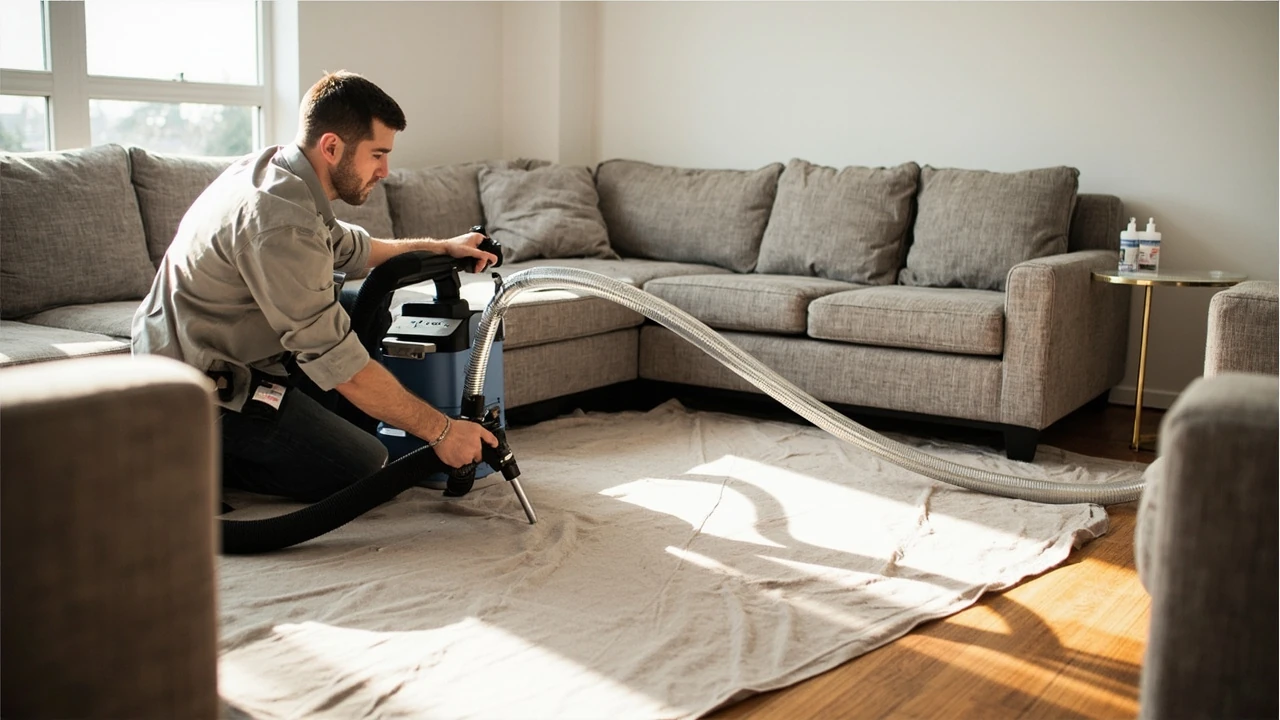
Couch cleaning service: what to expect and how to choose one
A living room sofa collects body oils, food crumbs, pet hair, dust, and indoor pollutants faster than almost any other surface in the home. Even households that vacuum weekly and rotate cushions find that fabric changes color, develops odors, or starts to feel rougher over time. A professional couch cleaning service exists for exactly this reason: it reaches past the surface layer that a household vacuum can touch and removes the soil that breaks down fibers from the inside.
Most homeowners don’t book a cleaning until something goes wrong — a spilled drink, a pet accident, a guest comment about the smell. By that point, the soil has usually been working against the fabric for months. The good news is that a single thorough visit, followed by reasonable care between appointments, can reset a sofa and extend its useful life. The harder part is choosing a provider, because results depend heavily on technician training, equipment, and the cleaning method used on each specific fabric.
This guide walks through what a couch cleaning service actually does, how the main cleaning methods differ, what affects pricing, what to ask before booking, and how to keep upholstery in good shape between professional visits. The goal is to help you hire with confidence rather than guess at the quote.
Why sofas need more than a vacuum cleaner
Upholstery acts like a filter. Air moves through the fabric every time someone sits down, stands up, or walks past, and each pass leaves a small amount of body oil, skin cells, hair, and household dust behind. Over time, those deposits form a sticky layer that traps more soil, dulls the color, and starts to smell. Vacuuming removes the loose layer on top, but it cannot pull embedded material out of the weave or the foam underneath.
Several factors speed this up:
- Pets that shed or sleep on the furniture, especially cats and dogs with thick undercoats.
- Open windows in high-traffic areas, which bring in pollen, road dust, and smoke residue.
- Kitchens that open directly into the living space, where cooking aerosols settle on nearby fabric.
- High humidity, which keeps moisture in the cushion and encourages odor-causing bacteria.
- Children and frequent guests, which simply means more contact hours per week.
Once a sofa holds enough embedded soil, the fabric starts to wear unevenly, and odors become harder to neutralize with sprays or air fresheners. A trained technician with hot-water extraction equipment can pull much of that material back out, which is why periodic deep cleaning is a normal part of fabric care rather than an optional luxury.
What a professional couch cleaning service actually does
Although every company runs a slightly different process, most visits follow a similar arc. Understanding each step makes it easier to compare providers and to spot a rushed or careless job.
Pre-inspection and fabric identification
The technician should look at the sofa before any water or solution touches it. A quick test identifies the fiber content, the weave type, and any pre-existing damage such as weakened seams, dye loss, or pilling. The technician also looks for stains, odors, and high-traffic patterns, and asks about the household — pets, smokers, recent spills — to choose a cleaning method that matches the fabric and the situation.
Many upholstery pieces carry a cleaning code, usually printed on a tag under a cushion. The four common codes are W (water-based cleaning safe), S (solvent only, no water), WS (either method), and X (vacuum only, no wet cleaning). A reputable provider reads this tag and adjusts the process accordingly.
Dry vacuuming and dry soil removal
Even before any wet cleaning begins, the technician uses an industrial vacuum with an upholstery tool to remove loose soil, hair, and grit. Skipping this step turns dry soil into mud once water hits the fabric, which makes the sofa look worse and shortens drying time problems.
Pre-treatment of spots and high-traffic areas
Stains from coffee, wine, ink, or pet accidents are usually pre-treated with a targeted solution matched to the stain type. High-traffic zones — the front edge of the seat cushion, the armrests, the headrest area — often get a general pre-conditioner that loosens body oils so the main cleaning step can lift them more easily.
Main cleaning: hot-water extraction, dry cleaning, or foam
The main cleaning method is where providers differ most. The three approaches below are the most common, and the right choice depends on the fabric code, the level of soiling, and how quickly the sofa needs to dry.
Post-treatment, grooming, and drying advice
After the main wash, the technician may apply a fabric protector, brush the pile back into place, and set up air movers to speed drying. Most sofas need several hours before they should be used again, and full drying can take longer in cool or humid homes. The provider should give a realistic drying estimate and a list of “do nots” for the first day, such as no sitting, no pets, and no closing the room off completely.
Cleaning methods compared: steam, dry, and foam
Different fabrics respond to different cleaning methods. The table below summarizes the three most common options a couch cleaning service will offer, with the trade-offs that matter most to a homeowner.
| Method | How it works | Best for | Drying time | Main trade-off |
|---|---|---|---|---|
| Hot-water extraction (steam cleaning) | Heated cleaning solution is injected into the fabric and immediately vacuumed back out, carrying soil with it. | W and WS coded fabrics, heavy soiling, pet households. | About 4–8 hours with airflow, longer in humid homes. | Longer drying window; requires fabric that tolerates water. |
| Dry cleaning (solvent or absorbent compound) | A low-moisture solvent or absorbent powder is worked into the fabric, then vacuumed out with the dissolved soil. | S coded fabrics, delicate weaves, water-sensitive materials. | 30 minutes to 2 hours. | Less effective on deep, heavy soil; relies on solvent quality. |
| Foam or shampoo cleaning | A foam is applied, agitated into the fabric, and partially extracted. Residue is vacuumed once dry. | Older methods, some commercial settings, very worn fabrics. | 2–6 hours. | Higher risk of residue that attracts new soil if not fully rinsed. |
For most modern residential sofas with a W or WS code, hot-water extraction gives the deepest clean because it both flushes the fabric and lifts soil with the vacuum action. Dry methods shine on delicate or solvent-only pieces, where any water would risk staining, shrinking, or warping the fibers.
How often to schedule a professional clean
There is no single correct interval. The right schedule depends on how the sofa is used, who uses it, and what conditions it lives in. A rough guide:
- Pet-free, low-traffic living room: every 18–24 months.
- Average family household, no pets: every 12 months.
- Pet household with one or more shedding animals: every 6–12 months.
- Smoker in the home, or a sofa near an active kitchen: every 6–12 months.
- Sofa with allergies, asthma, or small children: every 6 months, with interim vacuuming.
Spot cleaning between professional visits is normal and expected. The full deep clean is what resets the fabric; spot work keeps accidents from setting.
What affects the price of a couch cleaning service
Most companies price by the piece, by the size, or by the number of cushion seats. The same sofa can produce very different quotes depending on the variables below.
Size, configuration, and fabric type
A three-seat sectional with a chaise costs more than a two-seat loveseat because there is more surface area, more seams, and more time on site. Sectionals are usually quoted per section. Some fabrics — silk blends, vintage velvets, heavily textured weaves — take longer and require more care, which raises the price.
Level of soiling and stain treatment
Light maintenance cleaning on a well-kept sofa is faster than restoring a piece that has gone several years without a deep clean. Pet stains, ink, paint, and unknown discoloration often require separate pre-treatment steps, and most companies will quote pet odor work as an add-on.
Method and add-on services
Hot-water extraction, dry cleaning, and foam cleaning carry different labor and material costs. Add-ons such as fabric protector, deodorizer, or allergen treatment are usually priced per piece. Asking what is included in the base price — and what costs extra — is the easiest way to make two quotes comparable.
On-site versus in-plant cleaning
Most residential jobs are done on site. Some heavily soiled pieces, especially delicate antiques or items with odor problems, are picked up and cleaned at the provider’s facility, which adds a transport and return fee. On-site work is faster and avoids moving the sofa; in-plant work can be more thorough on certain jobs.
How to compare providers before booking
Two quotes for the same sofa can be very different numbers. The cheapest is not always the best value, and the most expensive is not always the most skilled. A short comparison framework helps cut through the noise.
| Question to ask | What a good answer sounds like | What to be cautious of |
|---|---|---|
| How is the price calculated? | Per piece, per section, or per cushion, with clear add-on pricing. | Vague “starts at” pricing with no scope. |
| What method will be used and why? | Explained in plain language, tied to the fabric code on the sofa. | One method for every job, regardless of fabric. |
| Do you carry your own hot water or use the home’s water? | Either can work, but the answer should be specific. | Evasive or unclear response. |
| What is the drying time and what should be avoided? | A realistic range with airflow and usage advice. | “It dries in 30 minutes” or no drying guidance at all. |
| Are you insured and do you work alone or with a crew? | Clear answer about insurance, training, and who shows up. | No insurance, no answer about who will be in the home. |
| What happens if a stain does not come out? | Honest answer about realistic results and any redo policy. | Promise that every stain will be removed. |
Reviews help, but a single one-star or five-star review tells you very little. Patterns in reviews — repeated complaints about wet furniture, surprise charges, or rushed jobs — are more useful than any individual comment.
Preparing your home before the visit
Most jobs go faster and dry faster when the living space is set up well in advance. A short checklist the day before helps the technician work efficiently and reduces the risk of accidental damage.
- Move breakable items, lamps, and décor off the sofa and the side tables nearest to it.
- Clear a path from the door to the sofa so equipment and hoses can be set up without obstruction.
- Vacuum the sofa and the surrounding floor yourself if you have a strong enough vacuum for the job.
- Note any specific stains or odors you want addressed, and point them out at the start of the visit.
- Plan for pets and children to be in another room while the cleaning and drying are underway.
- Decide where the technician should park if a service vehicle needs power or water access.
Most companies will handle moving light cushions and pillows, but they will usually ask you to empty any storage inside the sofa and to remove valuables from the area.
How to maintain upholstery between professional visits
A deep clean is the reset, but daily and weekly habits decide how long the reset lasts. Five small practices keep a sofa cleaner for longer and reduce how often a full service is needed.
Weekly vacuuming with the right tool
Use an upholstery attachment rather than a bare floor tool, and run it along the seams and creases where soil collects. A slow pass with light suction works better than a fast pass with full suction, because the air has time to pull debris out of the weave instead of just brushing the surface.
Rotate and flip cushions
Reversible cushions should be flipped and rotated every few weeks so the same spot does not absorb all the body weight. This is especially important for down-and-feather cushions, which compress quickly and lose their shape if used in the same orientation for months.
Address spills within minutes, not hours
Blot, do not rub, and work from the outside of the stain inward so the spill does not spread. Plain water or a small amount of mild dish soap is often enough for fresh spills. The longer a spill sits, the more it bonds with the fiber, and the more it will need professional help later.
Keep food and drinks on trays
Most permanent stains start as a single accident with coffee, wine, or sauce. A simple tray and a habit of using it cuts that risk dramatically without changing how the room looks.
Aim a fan or open a window after cleaning
Whether the cleaning is a quick spot treatment or a full extraction, airflow helps moisture leave the fabric. A box fan pointed across the sofa or a cracked window speeds drying and reduces the chance of a musty smell while the cushions are still damp underneath.
Safety and material caveats worth knowing
Most modern upholstery handles professional cleaning well, but a few categories need extra care. The list below is not exhaustive, but it covers the most common situations where a careful technician will slow down or change method.
- Silk and rayon blends are highly water-sensitive and almost always require a solvent-based method.
- Velvet and chenille crush easily, so agitation and brush pressure need to be controlled to avoid damaging the pile.
- Loose-weave linen can shrink or distort with hot water, so temperature and agitation matter.
- Older foam that has started to break down can shed particles into the cleaning solution, which is normal but can look alarming during extraction.
- Antique or custom-dyed pieces should be tested in an inconspicuous spot for colorfastness before any full cleaning.
A reputable couch cleaning service will flag these issues during the pre-inspection and explain the plan before starting. If a provider offers to skip the inspection or to use the same method on every fabric, that is a reason to look elsewhere.
Common mistakes homeowners make when hiring
Most bad experiences with a couch cleaning service come from a small number of recurring issues. Knowing them in advance makes it easier to avoid them.
- Choosing on price alone. A very low quote often means the technician is rushing or skipping steps that protect the fabric.
- Skipping the fabric code conversation. If nobody looks at the tag, the method chosen is essentially a guess.
- Assuming all stains are removable. Some stains, especially old dye transfer and certain inks, can only be reduced rather than removed.
- Closing the room to dry. Lack of airflow extends drying time and can leave a musty smell in the foam.
- Using the sofa too soon. Sitting on damp fabric pushes soil back into the fibers and leaves new marks.
None of these are deal-breakers on their own. They are simply the patterns that tend to separate a smooth experience from a frustrating one.
Frequently asked questions
How long does a typical couch cleaning service visit take?
For a single three-seat sofa in average condition, most on-site appointments take 45 minutes to 90 minutes of active cleaning, plus setup and breakdown. Sectionals, heavily soiled fabric, or multiple pieces can extend the visit to two or three hours.
Is hot-water extraction safe for all sofas?
No. It is safe for fabrics coded W or WS, which covers most modern residential upholstery. It is not safe for S-coded solvent-only pieces, and it can damage delicate materials such as silk, rayon, or certain velvets. A technician should always check the fabric code first.
How long will the sofa take to dry?
With good airflow and moderate indoor humidity, hot-water extraction typically dries in 4 to 8 hours. Dry cleaning methods can be ready in 30 minutes to 2 hours. Cool, humid, or poorly ventilated rooms can extend drying time into the next day.
Will the cleaning remove every stain?
Most fresh, water-based stains come out well. Old, set-in, or dye-based stains may only lighten rather than disappear. A technician should give an honest expectation after the pre-inspection rather than a blanket promise of removal.
Can pet odors be fully removed?
Surface odors usually respond well to a standard deep clean. Odors that have soaked into the foam or the frame may need a targeted deodorizing treatment, and in some cases the affected cushion may need replacement. Pet households benefit from a cleaning schedule of every 6 to 12 months.
Is professional cleaning worth it for an old sofa?
Often yes, especially if the frame and cushions are still in good shape. A deep clean can make an older sofa look and smell noticeably better, and it can buy a few more years before replacement. A technician can tell you during the inspection whether the fabric is still worth cleaning.
Do I need to provide water or electricity?
For on-site work, most providers bring their own hot water in the truck and run their equipment from the vehicle. Some smaller operations will use the home’s outdoor tap and power. Confirm the setup before the visit so there are no surprises.
Is fabric protector worth the extra cost?
For most households, yes. Protector helps liquids bead up on the surface long enough to be blotted away, and it slows future soil buildup. It is not a force field — spills still need quick attention — but it makes the next cleaning easier.
Can I stay home during the cleaning?
Yes. Many homeowners work from home or move between rooms during the visit. Pets and small children are usually better off in another part of the house while the equipment is running and the sofa is drying.
How do I find a trustworthy couch cleaning service in my area?
Look for a provider who is insured, willing to explain the method in plain language, and clear about pricing and drying time. A short conversation before the visit is usually a better signal than any single review.
Putting it into practice
A good couch cleaning service is part equipment, part technique, and part communication. The technician who takes a few minutes to identify the fabric, explain the method, and set a realistic drying expectation will almost always do better work than one who simply shows up and starts spraying. As a homeowner, the most useful thing you can do is ask clear questions, prepare the space, and give the sofa enough time to dry properly once the work is done. From there, a sensible maintenance routine — regular vacuuming, fast response to spills, and a professional deep clean on a schedule that matches your household — will keep the fabric in good shape for years.
If you are weighing quotes, focus less on the headline number and more on what is included, what method will be used on your specific fabric, and how the provider plans to handle stains and odors. Those three details usually predict the result far better than the price alone.
Leave a Reply