
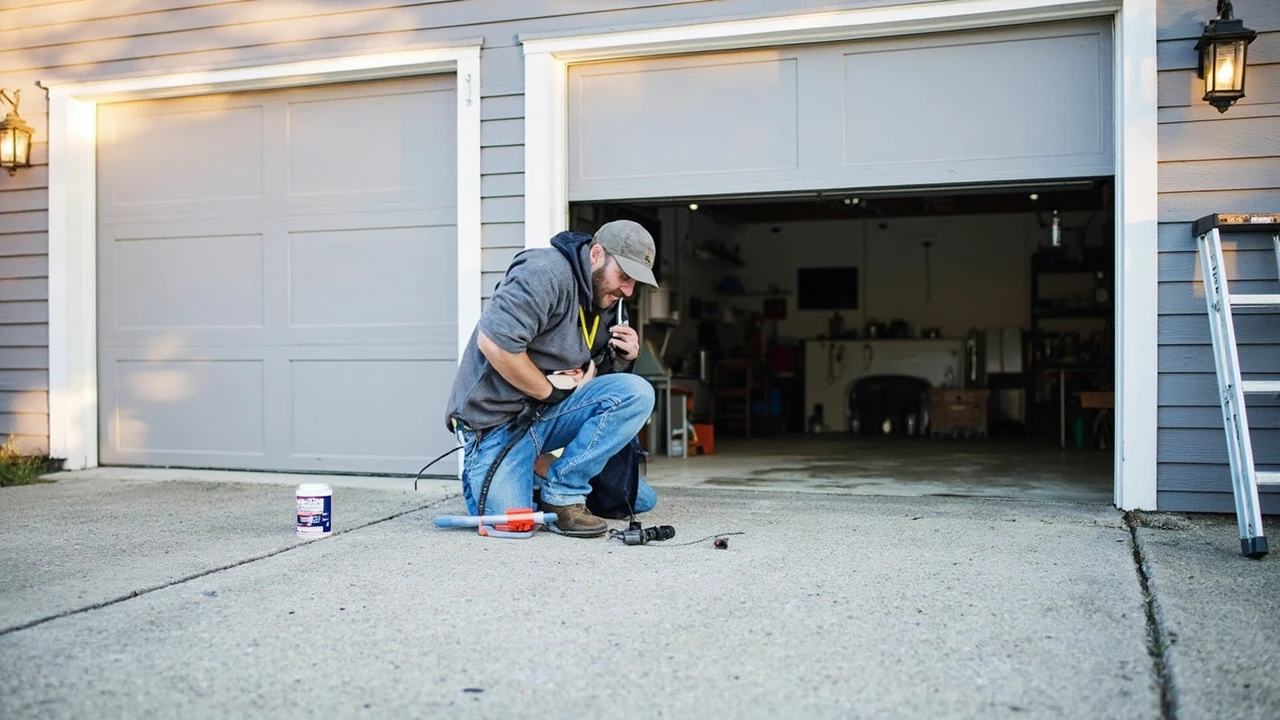
Garage door tune up: what it actually is and why it matters
A garage door tune up is the routine service that keeps a sectional or single-panel door moving smoothly, quietly, and safely. The springs, cables, rollers, hinges, tracks, and opener carry the weight of a door that often weighs 400 lb or more, so a small amount of wear in the wrong place can turn into a loud bang, a stuck door, or a safety incident. Most homeowners call a tune up when they notice a new noise, a slower open, or a door that no longer reverses when something blocks it. The same visit can usually quiet a rattling chain, balance a door that drifts down, and catch a fraying cable before it snaps.
This guide walks through what a proper garage door tune up includes, how to tell whether the door needs one, which steps a homeowner can do safely, and where a licensed technician is the better call. It also covers realistic cost ranges, inspection schedules by door age, and the small habits that extend the life of an opener and spring system. The goal is a quiet, balanced door that opens the same way on the hundredth cycle as it did on the first.
What a professional garage door tune up covers
A standard service visit is more than a squirt of grease on the hinges. The technician works through a checklist that targets the parts that wear fastest, then tests the safety systems that protect people, vehicles, and pets. The exact list varies by region and by company, but the core items below show up on almost every written estimate.
- Balance test: the door is disconnected from the opener and lifted by hand to about halfway. A balanced door should hold that position with little drift. If it falls or shoots up, the torsion or extension springs need adjustment.
- Spring inspection: the technician checks torsion springs for gaps between coils, rust, and proper winding, and checks extension springs for stretch, broken coils, and loose cables.
- Cable and drum check: lift cables are examined for fraying, kinks, and corrosion. The drums at the torsion shaft are checked for worn set screws.
- Roller and hinge inspection: nylon or steel rollers are spun to find flat spots, and hinges are checked for cracks and loose pins.
- Track alignment: horizontal and vertical tracks are checked for level, plumb, and proper spacing. Minor bends are straightened; badly damaged tracks are replaced.
- Opener force and travel settings: the close-force and open-force limits are set to manufacturer specifications so the door reverses correctly when it meets an obstruction.
- Safety reversal test: a 1-1/2 inch block of wood or a roll of paper towels is placed under the door. A passing door reverses within about two seconds of contact.
- Photo-eye alignment: the two sensors at the base of the track are aligned and the LED indicators checked. A passing pair goes solid when the beam is clear and triggers a reversal when broken.
- Lubrication: a white lithium or silicone garage-door lubricant is applied to rollers, hinges, springs, and the lock mechanism. The opener rail and chain or belt are serviced if the model calls for it.
- Hardware torque: brackets, lag screws, and the opener mounting are snugged. The technician also checks the rear torsion shaft bearings or the front flag bracket for play.
- Weather seal inspection: the bottom seal, perimeter weatherstripping, and header seal are checked for tears, gaps, and daylight. Worn seals let in water, leaves, and cold air.
The visit usually ends with a written report that flags anything that should be watched, anything that should be replaced within the year, and anything that is a safety risk today. That report is useful for budgeting and for comparing service companies, since a vague “all looks good” note is harder to verify than a line-by-line list.
Warning signs that a tune up is overdue
Doors rarely fail without warning. The signs below usually start small and grow over a few weeks. Catching them early usually turns a one-hour service call into something cheaper and safer than waiting for a spring snap or a door that comes off the track.
| Sign | Likely cause | Typical fix during a tune up |
|---|---|---|
| Loud bang on opening or closing | Worn extension spring, broken torsion spring, loose hardware | Spring replacement, retorque hardware, mount bracket repair |
| Door drifts down when released | Weak or stretched springs, miscalibrated opener | Spring rewind or replacement, opener force adjustment |
| Door shudders or jerks during travel | Bent track, worn rollers, dry hinges | Track alignment, roller replacement, hinge lubrication |
| Opener sounds like a straining motor | Unbalanced door, dry opener rail, failing motor | Balance adjustment, rail lubrication, motor evaluation |
| Slow response from wall button or remote | Weak batteries, antenna interference, failing receiver board | Battery replacement, antenna check, receiver inspection |
| Gap of daylight around the door when closed | Worn weatherstrip, shifted track, settling header | Seal replacement, track re-anchor, header repair |
| Door reverses randomly in clear weather | Misaligned photo eyes, sun glare, failing sensor | Sensor alignment, sun shield, sensor replacement |
| Visible rust on springs or cables | High humidity, road salt, age | Lubrication, rust treatment, part replacement if pitted |
A single symptom can have more than one cause, which is why a written diagnosis from a service call is more useful than a guess from a forum post. If two or more of these symptoms appear within a few weeks of each other, the door is usually telling the homeowner that the whole system is tired, not just one part.
What a homeowner can safely do between tune ups
Some of the items on a professional checklist are safe for a careful homeowner to repeat a few times a year. The line between DIY and call-a-pro sits at anything involving the springs or the cables under tension. Those parts store enough energy to lift the door, and a mistake can cause serious injury. The steps below stay on the safe side of that line.
- Visual walk-around: once a month, stand inside with the door closed and look for daylight around the edges, gaps in the panels, and loose hinge screws.
- Listen cycle: run the door up and down with the opener disconnected by pulling the red release cord. A balanced door should travel smoothly and hold at any point.
- Wipe the tracks: a dry microfiber cloth removes dust and pet hair from the inside of the vertical and horizontal tracks. Do not lubricate the tracks; the rollers need a dry surface to grip.
- Lubricate moving parts: a white lithium or silicone garage-door spray on rollers, hinges, springs, and the lock mechanism keeps friction down. Avoid WD-40 as a long-term lubricant, since it is a solvent that strips thicker grease.
- Test the reversal: place a 2×4 flat under the door and run it down. The door should reverse within about two seconds of contact. If it does not, the opener needs a force and travel adjustment, or service.
- Test the photo eyes: sweep a broom handle through the beam at the base of the door. The door should reverse immediately. If it does not, the sensors need alignment or cleaning.
- Replace remote batteries: a weak battery causes the door to open only when the button is held, which is hard on the receiver.
- Trim vegetation: keep plants and grass clear of the photo-eye line and the weatherstrip, since a blocked sensor triggers a safety reversal that looks like a malfunction.
A good habit is to pair these tasks with a seasonal chore, like changing the HVAC filter or testing smoke alarms. A door that gets fifteen minutes of attention twice a year is far less likely to fail on a cold morning than a door that is ignored until something breaks.
When to call a professional instead of doing it yourself
The line between DIY and service is not about skill level. It is about stored energy. A torsion spring can hold enough force to lift a car, and extension springs can launch across a garage when they snap. A homeowner who does not have a proper winding bar, a solid mounting surface, and recent experience should not touch the spring system. The same caution applies to the lift cables, the bottom brackets, and the center bearing plate.
| Task | DIY safe? | Why or why not |
|---|---|---|
| Lubricating hinges, rollers, springs | Yes | No stored energy, no adjustment required |
| Tightening hinge screws | Yes | Use a socket wrench, not a drill, to avoid stripping |
| Replacing weatherstrip | Yes | Cut to length, slide into the retainer |
| Aligning photo eyes | Yes | Loosen the wing nut, aim, retighten, test the reversal |
| Replacing rollers | Caution | Safe with the door open and supported, not with the spring under tension |
| Adjusting opener force and travel | Caution | Follow the manual, retest the reversal after every change |
| Replacing extension springs | No | Stored energy, sharp release, requires matched pair and proper tools |
| Winding or replacing torsion springs | No | High stored energy, requires winding bars, matched cycle rating |
| Replacing lift cables | No | Cables run through the spring system, must be released safely |
| Realigning bent tracks | No | Risk of door coming off track, requires a track level and knowledge of the geometry |
A simple way to think about it: if a task requires the door to be under spring tension while a tool is used, it is a job for a technician. If the task only requires the door to be closed or fully open, it is usually safe for a homeowner with a stepladder and a socket set.
How often a garage door should be tuned up
There is no single rule, because door age, climate, and usage all matter. A door that opens four times a day wears differently than a door that opens forty times a day in a busy household. The schedule below is a starting point that a homeowner can shorten or extend based on what the inspection reports say.
- New door, under 2 years: a light check at the one-year mark, then move to the standard schedule.
- Standard residential use, 2 to 7 years old: a full tune up every 12 months, with a visual check by the homeowner every season.
- Heavily used door, more than 8 cycles a day: a tune up every 6 to 9 months, with a closer look at the opener and the rollers.
- Coastal or road-salt environment: a tune up every 9 to 12 months, with rust checks on the hardware at every visit.
- Door older than 15 years: a tune up every 6 to 12 months, with an honest conversation about replacement parts versus a new door and opener.
A regular schedule turns the service call into a maintenance visit instead of an emergency visit. That usually means lower cost per visit, fewer surprises, and a longer life for the spring and opener. The same way a car needs oil changes on a calendar, a garage door needs service based on cycles, not on breakdowns.
Realistic cost ranges for a garage door tune up
Most homeowners pay a flat service fee for the visit itself, then any parts the technician recommends. The numbers below come from typical residential service pricing and can shift by region, by season, and by company. Use them as a budgeting guide, not as a quote.
| Service item | Typical price range | Notes |
|---|---|---|
| Standard tune up, single door | Around 100 to 200 dollars | Often includes balance, force, reversal, lubrication, hardware torque |
| Tune up with two doors | Around 150 to 300 dollars | Discount on the second door is common |
| Travel fee | Around 30 to 75 dollars | Some companies waive the fee when service is performed |
| Extension spring replacement, pair | Around 150 to 350 dollars | Matched pair, including labor |
| Torsion spring replacement | Around 200 to 450 dollars | Priced by spring size and cycle rating |
| Cable replacement, per side | Around 100 to 200 dollars | Often combined with a spring replacement |
| Roller replacement, full set | Around 120 to 250 dollars | Nylon rollers cost more than steel but run quieter |
| Opener replacement | Around 350 to 800 dollars installed | Belt-drive models run quieter than chain-drive |
| Bottom seal replacement | Around 80 to 180 dollars | Seal only, not including the retainer |
A tune up on its own is one of the cheaper services in home maintenance. The value is in catching the small things before they become the bigger line items. A single spring replacement is often more than a year of regular tune ups, so the math usually favors prevention over repair.
Choosing a service company for a tune up
Not every garage door company bills the same way, and a low flat fee can hide upsells. The checklist below helps a homeowner tell a careful company from a hurried one before the first screw is loosened.
- Asks for the door brand, age, and opener model on the phone so the right parts are on the truck.
- Quotes a flat fee for the tune up and lists common add-on prices before the visit.
- Carries general liability and workers compensation insurance, and can show proof on request.
- Sends a technician who explains what is being checked and why, rather than disappearing into the garage for thirty minutes.
- Provides a written report that lists pass or fail on each safety check, not a verbal “looks good.”
- Recommends replacement only when parts are actually worn, and offers to show the worn part to the homeowner.
- Stands behind the work with a written warranty on labor for at least 90 days, longer on new parts.
A company that hits most of these points is worth keeping on speed dial. A company that misses several is a reason to get a second opinion before agreeing to a big-ticket replacement, especially for springs and openers.
How a tune up interacts with the rest of the garage
The garage door is one of the largest moving objects in a home, and it shares the space with cars, storage, and sometimes a living area above. A good tune up looks at the whole system, not just the parts on a checklist. A few related items are worth bringing up with the technician during the visit.
- Garage floor seal: a worn seal at the bottom of the door lets in water, leaves, and small animals. Replacing it is a small job that pays off in a cleaner garage.
- Heating and cooling loss: an uninsulated metal door can let a surprising amount of heat move between the garage and the outside. An insulated door or a kit of foam panels reduces that loss.
- Smoke and carbon monoxide: a garage that shares a wall with living space should have a working detector, and the door’s weatherstrip helps keep fumes from drifting inside.
- Security: the door lock and the opener’s vacation lock mode are worth testing. A door that does not lock when the opener is disengaged is a weak point in a home security plan, and a related topic like home security systems can fill in the wider picture.
- Pest entry: gaps around the seal and the perimeter are how mice, wasps, and snakes get in. A tune up visit is a good time to seal those gaps.
Thinking of the door as part of a system rather than a stand-alone appliance is the difference between a fix that lasts a year and a fix that lasts a decade. The same technician who balances the springs can usually point out the other small issues before they become expensive ones.
Common mistakes that shorten the life of a garage door
Most of the calls a technician takes are preventable. The list below is not exhaustive, but it covers the habits that show up again and again on the same garage doors.
- Using WD-40 as a long-term lubricant on rollers and hinges, which strips the thicker grease and leaves parts dry.
- Lubricating the tracks, which makes the rollers slip and creates a grinding mess instead of smooth travel.
- Painting over the bottom seal, which hardens the rubber and pulls it out of the retainer.
- Leaving the emergency release cord pulled after a power outage, which lets the door fall freely the next time it is used.
- Wiring the photo eyes backward after a paint job, which puts the emitter and receiver in the wrong place and disables the safety reversal.
- Hanging items from the horizontal track, which bends the track and throws off the alignment of the rollers.
- Ignoring a door that drifts closed when released, since the springs are about to fail.
- Letting a child play with the remote, since a stuck button can wear the receiver board and run the motor continuously.
Most of these are easy to avoid with a quick check during a seasonal chore. A two-minute walk around the door catches the most common ones before they cause a service call.
How a tune up differs from a full repair visit
The terms get used loosely, and a homeowner can be charged for a “tune up” that is really a half-hour repair, or for a “repair” that is really a maintenance visit with a small part replaced. The differences below are useful when comparing two written estimates.
| Service type | What is included | When to book |
|---|---|---|
| Tune up | Inspection, balance test, safety checks, lubrication, hardware torque, minor adjustments | Annual maintenance, no obvious failure |
| Repair visit | Replacement of a specific failed part, plus the safety checks that go with it | A spring snap, a broken cable, a door off track, a failed sensor |
| Preventive service | Replacement of a part that is worn but not yet failed, during a scheduled visit | When the technician flags a part that will fail before the next visit |
| Emergency visit | Same-day or after-hours response to a door that will not open or close | Car stuck inside, security issue, severe weather |
| Replacement | New door, new opener, or both, plus removal of the old equipment | Door older than 20 years, repeated major failures, energy upgrade |
Knowing the difference helps a homeowner read a written estimate. A line item that says “adjustment” usually means the part was within spec and was left alone, while “replacement” means a new part was installed. The clearer the estimate, the easier it is to compare two companies side by side.
Safety checks that should happen on every visit
The most important items on a tune up are the ones that protect people. The two checks below are so important that a homeowner can run them between visits as a quick safety test. A door that fails either one should be taken out of automatic service until it is fixed.
- Reversal test: place a 2×4 flat on the ground under the center of the door. Run the door down with the wall button. A safe door touches the board and reverses within about two seconds. A door that drives into the board and stops needs a force and travel adjustment, or a service call.
- Photo-eye test: close the door, then sweep a broom handle through the beam at the base of the door. A safe door reverses immediately when the beam breaks. A door that closes all the way is a serious safety risk and should not be used until the sensors are aligned or replaced.
These two checks are the standard that the federal garage door safety rules, the manufacturer instructions, and the technician’s checklist all share. A door that passes both is a door that can be used with confidence, and a door that fails either one is a reason to stop using the opener until the issue is resolved.
How door age changes the tune up conversation
A five-year-old door and a twenty-year-old door are different maintenance problems. The same checklist still applies, but the conversation shifts toward replacement instead of repair once the door crosses a certain age. The table below summarizes how the priorities move over time.
| Door age | Tune up focus | Replacement conversation |
|---|---|---|
| 0 to 5 years | Lubrication, hardware torque, opener settings | Rare, usually only after a defect |
| 5 to 10 years | Roller wear, cable condition, balance | Consider when opener starts to fail |
| 10 to 15 years | Spring cycle rating, panel condition, weather seal | Plan a budget line for door and opener |
| 15 to 20 years | Safety reversal, photo eyes, structural fasteners | Compare repair cost to a new insulated door |
| Over 20 years | Full inspection, written report on remaining life | Replacement is usually more cost-effective than another major repair |
The decision is not just about cost. An older door is often less insulated, less secure, and heavier than a modern insulated steel or composite door. A homeowner who is already paying for spring replacement can sometimes come out ahead by replacing the door and opener at the same time, then putting the new system on a fresh maintenance schedule.
Frequently asked questions
How long does a garage door tune up take?
A standard residential visit runs between 45 minutes and 90 minutes for a single door, with more time added for a second door, a noisy opener, or a part that needs replacement on the spot. The first visit at a new home usually takes longer because the technician has to learn the system.
How much does a garage door tune up cost on average?
Most homeowners pay between 100 and 200 dollars for a single-door tune up, with a travel fee of around 30 to 75 dollars on top in some markets. A second door on the same visit is often discounted. The cost rises if springs, cables, or rollers need to be replaced during the visit.
How often should a garage door be tuned up?
Once a year is a sensible baseline for a normal residential door, with an extra visit every six to nine months for a heavily used door, a coastal or road-salt climate, or a door that is more than 15 years old. A door that gets regular attention from the homeowner can stretch the schedule a bit, while a door that is ignored usually fails before the next scheduled visit.
What is included in a standard garage door tune up?
A standard visit includes a balance test, spring inspection, cable and drum check, roller and hinge inspection, track alignment, opener force and travel settings, safety reversal test, photo-eye alignment, lubrication of moving parts, hardware torque, and a weather seal inspection. The technician should leave a written report that lists pass or fail on each item.
Can a homeowner do a garage door tune up without a technician?
Most of the inspection and lubrication steps are safe for a homeowner who is comfortable on a stepladder. Spring replacement, cable replacement, and track realignment are not, because the parts store enough energy to cause serious injury. The safest pattern is a homeowner doing the visual and lubrication work between professional visits, and a technician handling anything that involves the spring system.
What is the difference between a tune up and a repair visit?
A tune up is scheduled maintenance that checks the whole system and replaces nothing by default. A repair visit is booked when a specific part has failed, like a snapped spring or a broken cable, and the technician replaces that part during the visit. A preventive visit is somewhere in between, where the technician replaces a part that is worn but not yet failed.
What are the most common parts replaced during a tune up?
Rollers, weatherstripping, and remote batteries are the most common low-cost replacements. Extension springs and lift cables sit in the middle. Torsion springs and openers are the larger replacements that often turn a tune up into a repair visit. The technician should always show the worn part before swapping it in.
Is a noisy garage door dangerous or just annoying?
Both. A squeak is usually a lubrication issue and is mostly annoying, while a loud bang, a grinding sound, or a door that shudders during travel is usually a worn part that can fail without warning. Any new noise that did not exist a month ago is worth a closer look, since the same wear that creates the noise can also create a safety risk.
What is the most important safety check on a garage door?
The reversal test is the single most important check. A door that closes on a 2×4 should reverse within about two seconds, and a door that does not should be taken out of automatic service until the opener is adjusted or repaired. The photo-eye test is a close second, and a door that closes when the beam is broken is a serious safety risk.
How can a homeowner extend the life of a garage door between tune ups?
Lubricate the rollers, hinges, and springs twice a year with a white lithium or silicone garage-door spray, keep the tracks dry and clean, replace remote batteries when the range gets short, and run the reversal and photo-eye tests every season. A door that gets fifteen minutes of attention twice a year usually outlasts a door that is ignored until something breaks.
A simple checklist for the next visit
Before booking the next tune up, it helps to have a short list of questions ready. The list below covers the items that a careful homeowner wants answered before the technician leaves.
- Did the door pass the balance test, the reversal test, and the photo-eye test today?
- Which parts are within spec, which are worn, and which should be replaced within the year?
- What is the spring cycle rating, and how many years of life are likely left on the current springs?
- Is the opener’s force and travel within manufacturer spec, and is the model still supported with parts?
- Are the weatherstrip and the bottom seal in good condition, or is it time to plan a replacement?
- What is the next service date on the calendar, and what should the homeowner watch for between visits?
A garage door that gets regular attention is one of the quieter, safer parts of a home. The spring, cable, roller, and opener systems are well understood by the companies that service them, and a yearly visit is usually enough to keep a door running smoothly for a decade or more. The small cost of a routine tune up is easier to plan for than the larger cost of an emergency repair, and a door that has been serviced on a schedule is also easier to sell when the time comes to move.
Leave a Reply